
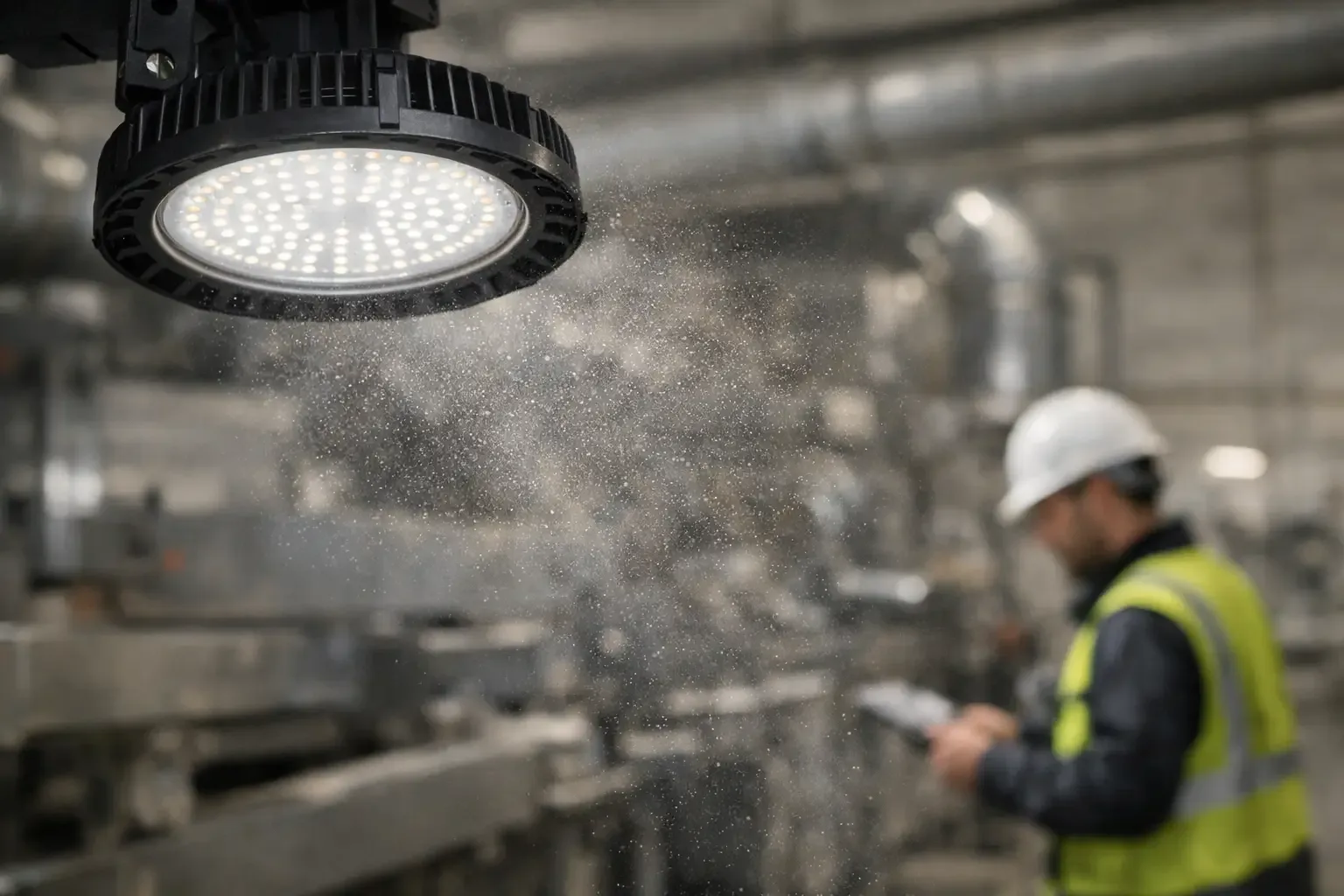
A layer of ordinary dust on an LED fixture is not automatically a fire or explosion hazard. The real question is what the dust is, how much may become airborne, whether it is combustible, and whether the fixture is approved for that classified area. So, are LEDs safe around dust? In a typical warehouse with noncombustible nuisance dust, often yes. In a grain elevator, feed mill, chemical process area, woodworking operation, or metal-processing facility, the answer depends on the hazardous-location classification and the fixture's listing.
For combustible-dust applications, review Maes Lighting's explosion-proof lighting product options before selecting a fixture. The right housing, temperature code, ingress protection, mounting method, and certification documentation are part of the safety decision - not accessories to address after installation.
Why dust changes the lighting decision
Dust creates two separate concerns. First, deposited dust can cover heat-dissipating surfaces, trap heat around the fixture, reduce output over time, and accelerate driver or gasket failure. Second, certain dusts can form an explosive atmosphere when dispersed in air at the right concentration and exposed to an ignition source.
Combustible dust is not limited to visibly dramatic materials. Grain, flour, sugar, starch, coal, wood, plastic, rubber, some pharmaceuticals, and many metal dusts can present a hazard under the right conditions. A facility cannot determine the risk by appearance alone. Particle size, moisture content, dust concentration, confinement, and material test data all affect the hazard assessment.
LED technology reduces some risks associated with older light sources because LEDs do not rely on a hot filament or arc tube. That does not make every LED fixture suitable for a dusty hazardous location. LED drivers, electrical connections, damaged seals, excessive surface temperature, and improper installation can still create unacceptable ignition risks. The fixture must match the area classification established by the facility and the authority having jurisdiction.
Ordinary dust versus combustible dust locations
In an unclassified industrial space, dust management is largely a maintenance and durability issue. A sealed vapor-tight fixture with an appropriate IP rating may be a practical choice where airborne debris, moisture, or periodic washdown are present. The fixture should still be installed where dust cannot accumulate excessively on its heat sink or lens, and it should be included in the site's cleaning schedule.
A classified combustible-dust location requires a different approach. Under the NEC Division system, Class II locations address combustible dust. Division 1 generally applies where combustible dust is or may be in suspension under normal operating conditions, while Division 2 applies where dust is not normally airborne in hazardous concentrations but may accumulate or become suspended under abnormal conditions.
The Zone system may also apply, particularly on projects using IECEx or ATEX-based documentation. In either system, classification is determined by the site conditions, not by the fixture a purchaser prefers. Electrical engineers, safety personnel, and the AHJ should establish the required classification before a fixture is specified.
A dust-tight enclosure is not automatically explosion-proof
IP ratings and hazardous-location listings solve different problems. An IP66 or IP69K fixture can be highly resistant to dust and water ingress, making it well suited to washdown and sanitary applications. However, an IP rating alone does not demonstrate that the fixture is approved for a Class II combustible-dust area.
Similarly, the term explosion-proof is often used broadly, but the fixture's actual markings matter. Review the complete label and datasheet for the applicable Class, Division or Zone, Group, temperature code, ambient range, and certification body. A fixture rated for Class I flammable gases is not necessarily rated for Class II combustible dust. Do not assume that one hazardous-location approval covers every hazard present at the site.
Surface temperature is a critical LED safety factor
The maximum external surface temperature of the luminaire matters in dust environments. A combustible dust layer can insulate the fixture and cause its exterior temperature to rise. If that surface reaches the dust's ignition temperature, the risk becomes serious even when the electrical components are enclosed.
This is why temperature code, maximum ambient rating, and installation conditions must be reviewed together. A fixture may perform properly in a clean 104 F ambient environment but operate at a higher temperature if process heat, direct radiant heat, dust buildup, poor airflow, or enclosed mounting conditions are introduced. The product's published limits are not suggestions. They are operating boundaries that support its safety listing.
Maintenance teams should inspect fixtures for dust buildup, damaged lenses, compromised conduit entries, loose mounting hardware, and degraded gaskets. Cleaning practices also matter. Compressed air can disperse combustible dust into the atmosphere and may create the very cloud that a dust-control program is intended to avoid. Follow the facility's written housekeeping and hazardous-dust procedures rather than treating fixture cleaning as a routine cosmetic task.
Selecting LEDs for grain, food, and process facilities
Grain elevators, feed operations, and agricultural processing facilities deserve particular caution because organic dust may be both combustible and pervasive. Lighting should be selected for the classified area, expected dust exposure, ambient temperature, vibration, mounting height, and access requirements. Reliable illumination is operationally important, but a listing that does not match the location is not an acceptable compromise.
Food and beverage plants present a related but distinct selection challenge. Flour, sugar, starch, and other ingredients may create combustible-dust concerns in some processing zones, while sanitation requirements drive fixture selection in others. A stainless or corrosion-resistant NSF-rated fixture with IP69K washdown protection may be appropriate for a sanitation area, but hazardous-dust approval must be verified separately when combustible particulate is present.
For unclassified wet or dusty areas, vapor-tight luminaires often provide the right balance of sealed construction, impact resistance, and maintainability. When Buy America Act compliance is required, identify it early in the submittal process. Maes Lighting's Explosion Proof IR1, IR3, IR4, and IR7 series, along with CIT models on the vapor-tight product line, are the specific products covered under the Buy America Act. Confirm the required project documentation, domestic-content interpretation, and exact fixture configuration before release.
What are the best high temperature lights for industrial use?
The best high temperature lights for industrial use are not simply fixtures with the highest published ambient-temperature number. They are fixtures selected around the actual thermal conditions at the mounting location: maximum ambient air temperature, radiant heat from furnaces or kilns, distance from hot process equipment, airflow, dust loading, and required hazardous-location classification.
For steel mills, kilns, furnaces, foundries, and high-heat manufacturing areas, LED thermal derating deserves close attention. As ambient temperature rises, LED output and component life may decrease. A high-temperature fixture is engineered to manage that condition within a specified range, but it cannot overcome heat beyond its rated limits. Mounting a fixture farther from the heat source, adding shielding where permitted, or choosing a different mounting approach can materially affect service life.
If the area also contains combustible dust, the high-temperature and hazardous-location requirements must both be satisfied. A fixture rated for high ambient heat is not automatically suitable for Class II service, and a dust-rated explosion-proof fixture may not tolerate furnace-adjacent temperatures. This is a common specification gap and a costly one if discovered after equipment arrives on site.
A practical review before ordering
Start with the material safety data and the facility's area classification. Then compare the fixture's label, datasheet, temperature code, maximum ambient rating, ingress protection, mounting instructions, and photometric file against actual site conditions. Consider whether dust will settle on the fixture, whether washdown chemicals are used, how frequently access is available for maintenance, and whether emergency or egress coverage is involved.
For retrofit work, do not rely solely on the rating of the fixture being replaced. The existing unit may have been installed under an older standard, in the wrong location, or under process conditions that have changed. Electrical classification drawings, current hazard assessments, and AHJ requirements should guide the replacement.
The practical answer is that LEDs can be safe around dust when the fixture, classification, temperature limits, and housekeeping practices align. Where combustible dust or elevated heat is present, treating lighting as a specification item rather than a commodity purchase protects people, uptime, and project approval.