
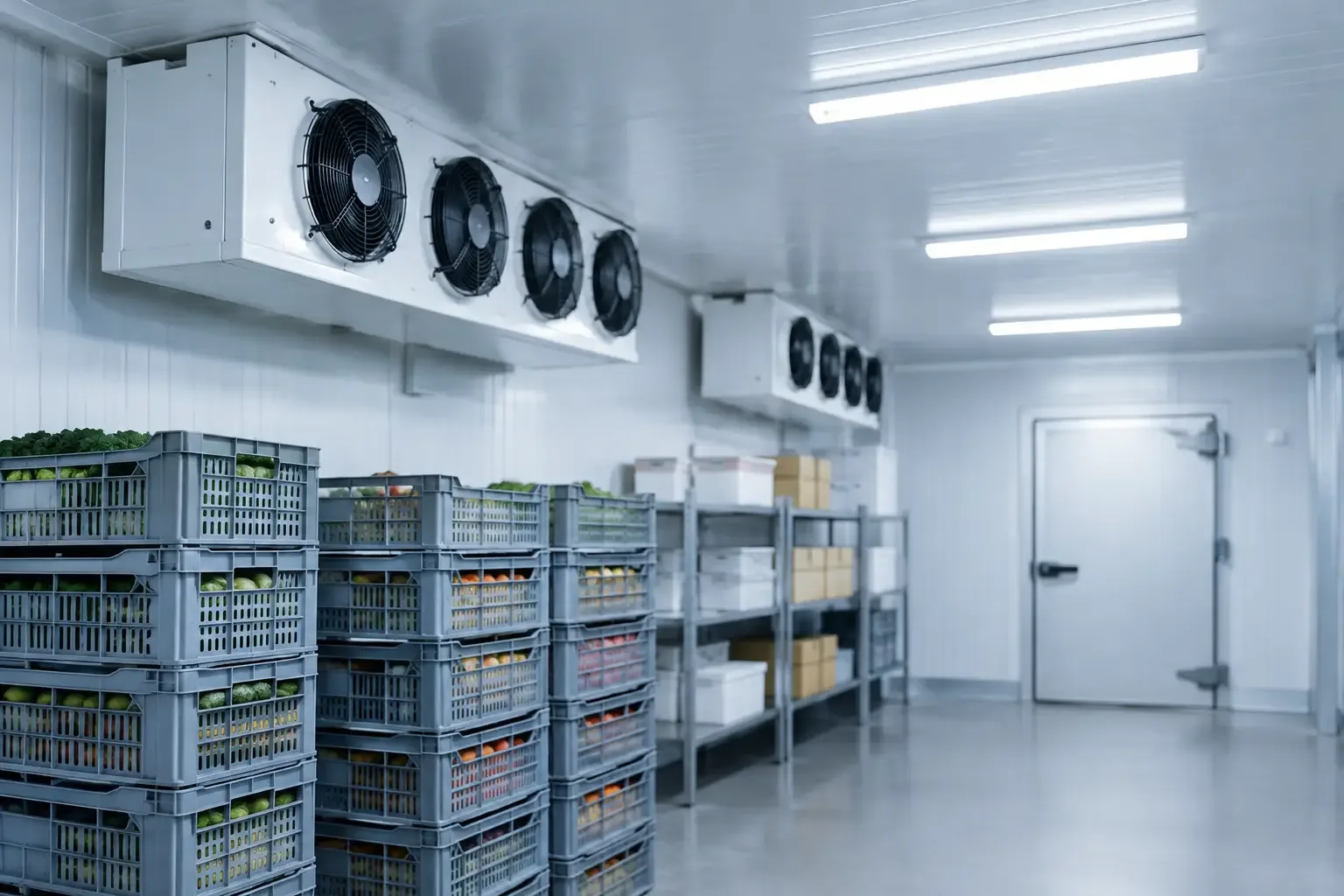
A fixture that performs well in a dry warehouse can fail quickly inside a refrigerated warehouse, freezer, blast chiller, or food-processing cold room. Cold room lighting has to manage more than low ambient temperature. It must also withstand condensation, thermal cycling, frequent door openings, washdown exposure, vibration, and the access limitations that make a simple fixture replacement expensive.
For facility teams, the correct decision is not simply choosing the highest lumen package or the lowest fixture price. We have found that the most reliable cold-room projects begin by matching the fixture's environmental rating, driver performance, mounting method, and light distribution to the actual operating conditions. Maes Lighting supports industrial teams that need application-specific documentation, including photometric files, datasheets, and certification information, before a fixture is approved for installation.
Why cold room lighting fails
Cold environments place unusual stress on lighting equipment. At first glance, LEDs appear well suited to refrigeration because they generate less heat than older technologies and can deliver strong efficacy. That is true, but the LED array is only one part of the fixture. The driver, seals, lens, cable entry points, mounting hardware, and internal connections must all be suitable for the operating environment.
The most common problem is not the steady-state temperature of the room. It is the transition between temperatures. When a fixture is exposed to warm, humid air during loading activity and then returns to a low-temperature space, moisture can condense on and around the housing. Repeated cycling can degrade gaskets, corrode hardware, and allow moisture to reach electrical components if the fixture is not properly sealed.
Freezer applications add another concern: driver starting and operating temperature. A fixture may be rated for a low minimum ambient temperature, but that rating should be verified at the driver level rather than assumed from the LED specification. Cold-capable drivers, appropriate wiring methods, and listed components matter when a room operates at temperatures well below freezing.
Start with the room, not the fixture
A practical cold room lighting specification starts with a site assessment. Document the normal operating temperature, minimum expected temperature, room dimensions, ceiling height, rack layout, door locations, cleaning method, and hours of operation. A 35°F produce cooler and a -20°F frozen-storage room may both be called cold storage, yet they place very different demands on equipment.
Also identify where moisture originates. In some facilities, humidity enters primarily through dock doors and personnel traffic. In others, ceiling condensation, steam migration from adjacent processing areas, or routine sanitation creates a direct water-exposure issue. If fixtures are installed near evaporator coils, defrost cycles and localized condensation deserve special attention.
The lighting layout should account for the work being performed. Forklift aisles, pallet-pick faces, staging zones, inspection tables, loading doors, and emergency egress routes need usable vertical and horizontal illumination. A high-output fixture can still create poor working conditions if it produces glare on wrapped product, reflective floors, forklift windshields, or stainless-steel equipment.
Temperature rating and thermal design
Specify a fixture with a published ambient operating range that includes the facility's lowest temperature with a reasonable project margin. Do not substitute a general-purpose LED fixture because its housing looks sealed. Request the manufacturer data sheet and confirm the stated minimum ambient rating, driver operating limits, and any limitations related to startup, dimming, or emergency operation.
Low temperature can improve LED junction performance, but it can create problems for electronics and materials not designed for the application. Lens materials may become more brittle, seals can lose flexibility, and unsuitable cable jackets can stiffen or crack. For freezer rooms, a fixture's complete assembly rating matters more than a favorable LED efficacy figure.
Ingress protection is not a washdown claim
IP ratings help define protection against solid particles and water ingress. An IP66 fixture is generally appropriate for strong water jets, while IP69K is intended for demanding high-pressure, high-temperature washdown conditions. The right rating depends on the sanitation process, not merely on the fact that water is present.
A cold warehouse with occasional condensation may need a vapor-tight fixture with a suitable ingress-protection rating. A food-processing cold room where crews use high-pressure sanitation equipment may require a higher washdown rating, corrosion-resistant construction, sealed cable entries, and mounting details that avoid water traps. It depends on where the fixture sits relative to spray paths and whether sanitation procedures are performed in place.
For food facilities, verify whether the fixture needs NSF recognition or certification for the application. NSF/ANSI 2 addresses food equipment requirements, while NSF/ANSI 51 addresses materials used in food equipment. The relevant standard depends on how the fixture is installed and whether it is used in a food-zone-adjacent environment. NSF provides the applicable certification and listing information, but the facility's sanitation and quality teams should establish the actual requirement for the space.
Choose construction that supports sanitation and maintenance
Cold-room fixtures should be selected as complete assemblies. Smooth, cleanable housings, durable gaskets, captive hardware, impact-resistant lenses, and corrosion-resistant fasteners all reduce maintenance exposure. Stainless steel may be appropriate in aggressive washdown areas, but it is not automatically necessary in every refrigerated room. A well-built coated aluminum or polycarbonate vapor-tight fixture can be the practical option where chemicals and direct washdown are limited.
Avoid products with exposed seams, unsealed conduit entries, incompatible gasket materials, or lenses that can crack under impact. Forklift activity and pallet movement create real collision risk, particularly in low-clearance aisles. If fixtures are mounted where impact is likely, consider protective guards only after confirming they will not compromise sanitation access, photometric performance, or the fixture's listing.
Maintenance access is equally important. Replacing a failed fixture above storage racks may require product relocation, lift equipment, downtime, and strict safety coordination. A fixture with a higher initial cost can be the better financial choice when it reduces service calls in a difficult-to-access freezer.
Use photometrics to prevent dark aisles and glare
Cold storage lighting is often overdesigned in open areas and underdesigned at vertical work surfaces. Photometric planning helps avoid both. The layout should evaluate maintained foot-candles, uniformity, shadowing from racks, and the mounting height available above equipment.
Narrow-aisle storage frequently benefits from an optic that directs light down the aisle rather than spilling it onto rack tops. Open loading or staging areas may require a broader distribution. For high-bay freezer applications, fixture spacing, beam distribution, and reflectance from ceilings and walls can substantially affect the final result.
Controls can lower energy use, but control selection should be deliberate. Occupancy sensors may work well in intermittently used freezer aisles, although sensor placement must account for doors, rack obstructions, forklift movement, and the time workers need to complete a task. In rooms with constant traffic, continuous operation or scheduled control may be more predictable. Verify that the driver and controls are rated for the room's low-temperature environment.
Address electrical safety and compliance separately
A cold room is not automatically a hazardous location. However, certain facilities can have hazardous-location considerations due to flammable refrigerants, fuel systems, combustible dust, or nearby process operations. If the area has been classified under the National Electrical Code, fixture selection must match the documented Class, Division, or Zone requirement. A vapor-tight fixture is not a substitute for explosion-proof or hazardous-location-rated equipment.
For all projects, request documentation from recognized testing organizations when it is required by the specification or authority having jurisdiction. UL Solutions and Intertek evaluate and certify products to applicable safety standards, and their marks should be verified against the specific product and intended installation. The fixture label, data sheet, and project submittal should align. A generic statement that a product is “UL rated” is not enough for a professional review.
Emergency lighting also deserves separate consideration. Cold temperatures can reduce battery performance, so emergency fixtures or remote backup systems must be listed and rated for the expected ambient conditions. Exit and egress requirements should be coordinated with the facility's electrical engineer and local code requirements.
A practical specification checklist
Before releasing a purchase order, confirm the minimum ambient temperature, ingress-protection rating, washdown exposure, corrosion resistance, mounting method, voltage, control compatibility, and photometric layout. Confirm whether NSF, UL, Intertek, hazardous-location, or other project-specific documentation is required. Then review lead time and serviceability, especially when a failed fixture could interrupt a temperature-controlled operation.
The best cold room lighting installation is rarely the one with the most fixtures or the cheapest unit cost. It is the one that gives workers clear visibility, survives the actual cleaning and temperature conditions, and provides the documentation needed to move through approval without avoidable delays. When the operating environment is defined correctly at the start, lighting becomes one less source of downtime inside a facility where uptime is already hard won.