
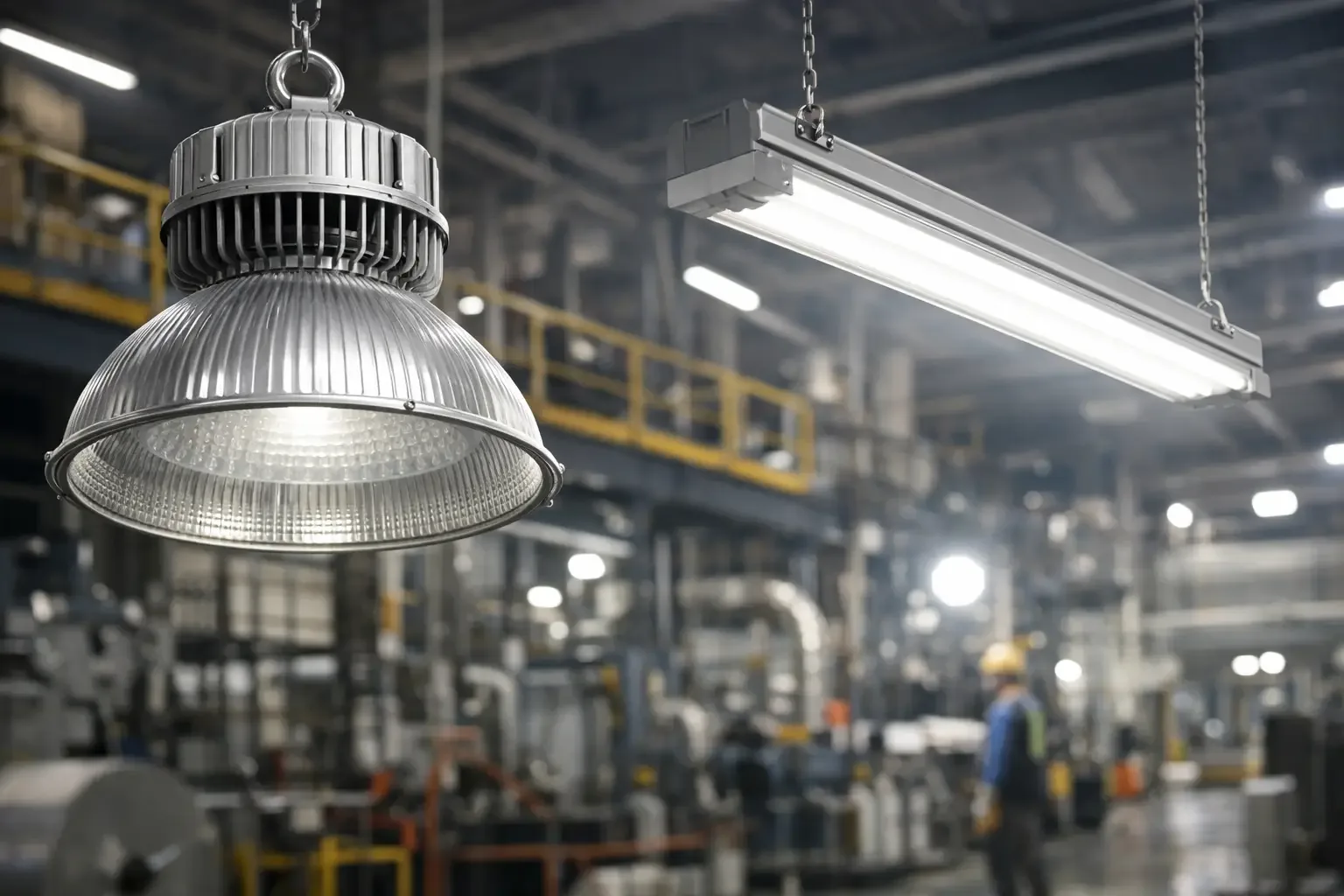
A lighting failure on an office floor is inconvenient. A failure above a process line, inside a classified area, or over a washdown zone can halt production, create a safety concern, and complicate compliance. Industrial light fixtures must do more than produce sufficient foot-candles. They need to withstand the actual conditions of the installation: heat, vibration, corrosive agents, airborne dust, water intrusion, pressure washing, and potentially ignitable gases or dusts.
For support matching fixture construction, ratings, and documentation to your site conditions, contact Maes Lighting about industrial light fixtures before releasing a purchase order. A technical review early in the project can prevent a common and costly problem: specifying a general-purpose LED fixture where a hazardous-location, vapor-tight, high-temperature, marine, or sanitary-rated luminaire is required.
Start With the Environment, Not the Wattage
Wattage, lumen output, and color temperature matter, but they are not the first decisions in an industrial lighting project. The operating environment determines which fixture families are viable. Once the installation conditions are understood, photometrics can establish mounting height, spacing, aiming, and light levels.
A dry warehouse with conventional ambient temperatures may be well served by industrial LED high bays. A steel mill, foundry, or kiln-adjacent area may require high-temperature lighting built to perform where fixture housings, drivers, lenses, and seals are exposed to sustained elevated heat. A wastewater facility or processing area with moisture and chemical exposure may require a sealed vapor-tight fixture with materials selected for the environment.
The distinction is more than a matter of fixture life. Installing the wrong housing, gasket system, lens material, or driver configuration can lead to early failures, recurring maintenance work, and a lighting system that does not meet the facility's safety or sanitation requirements.
Hazardous Locations Require Classification-Driven Selection
Explosion-proof lighting is often used as a broad term, but hazardous-location selection should begin with the area classification shown on the facility drawings or provided by the authority having jurisdiction. The applicable Class, Division or Zone, Group, and temperature code establish the baseline for fixture suitability.
For example, a fixture intended for an area with flammable vapors may not be appropriate for combustible dust. Likewise, a product with an acceptable electrical classification can still be a poor installation choice if its ambient-temperature range, mounting method, corrosion resistance, or optical distribution does not fit the application.
Hazardous-location industrial light fixtures are commonly used in refining, petrochemical processing, grain handling, paint operations, chemical processing, and other areas where a normal luminaire could become an ignition source. The fixture's enclosure, wiring method, thermal characteristics, and certification markings all need to align with the classified area. Procurement teams should request datasheets and certificates as part of the submittal package rather than treating compliance documentation as an afterthought.
Buy America Act Products for Qualified Projects
Projects subject to domestic-content requirements need verification at the fixture-series level. Maes Lighting offers Buy America Act coverage for the Explosion Proof IR1, IR3, IR4, and IR7 series. The CIT models within the vapor-tight fixture line are also covered under the Buy America Act.
That distinction should be documented clearly in project records. A fixture may look similar to a qualifying product while being manufactured under a different configuration or series. Confirm the applicable requirement, the requested documentation, and the exact model being quoted before finalizing a submittal or release.
Wet, Washdown, and Sanitary Areas Need More Than an IP Rating
Ingress protection is a useful starting point, but it does not tell the entire story for food and beverage plants, cold storage facilities, pharmaceutical operations, and other sanitary environments. In these applications, lighting can be exposed to high-pressure washdown, detergents, sanitizers, temperature swings, and frequent condensation.
Vapor-tight fixtures are designed to protect internal electrical components from moisture, dust, and contaminants. For many wet industrial areas, they are a practical choice because their enclosed construction reduces the points where water and debris can enter. However, a standard vapor-tight product is not automatically appropriate for every washdown process.
Where aggressive sanitation is routine, NSF and IP69K-rated lighting may be the better fit. IP69K indicates protection against high-pressure, high-temperature water jets under defined test conditions. NSF-rated products are suited to environments where cleanability and materials compatibility matter. Smooth external surfaces, sealed hardware, and lens construction can make a real difference in whether a fixture remains serviceable after repeated cleaning cycles.
The trade-off is cost and specificity. An IP69K fixture may be unnecessary in a damp utility corridor, while using a lower-rated fixture above an open processing line can create repeated maintenance and inspection issues. The right choice depends on where the fixture is installed, how it is cleaned, and whether it is exposed directly to product, washdown spray, or condensation.
Heat, Corrosion, and Vibration Change the Failure Pattern
Harsh industrial sites rarely expose lighting to only one stressor. A high-temperature manufacturing area may also have vibration and airborne particulates. A marine installation may combine salt spray, humidity, wind-driven water, and corrosive atmosphere. A fabrication shop may introduce welding smoke, dust, impact risk, and frequent equipment movement.
In these conditions, evaluate the full fixture assembly. Housing material, finish, gasket design, lens selection, cable entries, mounting hardware, and driver location all affect service life. A luminaire with strong lumen output but inadequate thermal management may lose performance or fail prematurely. Similarly, corrosion-resistant construction is not optional in coastal and marine locations simply because a fixture is installed under cover.
Marine luminaires should be selected with attention to environmental exposure and mounting conditions. Fixtures installed in engine rooms, exterior walkways, loading areas, and enclosed vessel spaces may have very different requirements for ingress protection, vibration tolerance, emergency operation, and corrosion resistance.
Use Photometrics to Protect Visibility and Uptime
After the fixture category is established, the lighting layout should address the work being performed. High bays and floodlights are not interchangeable just because they deliver similar lumen packages. High bays are typically designed for broad, downward illumination from elevated mounting heights. Floodlights can be aimed to illuminate yards, facades, loading areas, equipment, and task zones, but aiming must control glare and spill light.
Photometric files allow designers and contractors to calculate light levels across the work plane, identify dark areas, and verify uniformity. This is especially useful in rack aisles, loading docks, outdoor processing areas, maintenance bays, and locations with tall equipment that creates shadows.
More light is not always better. Excessive brightness or poorly controlled optics can create glare, reducing visibility for forklift drivers, crane operators, and maintenance personnel. The better objective is usable light where people inspect, move, operate, and maintain equipment.
Build Documentation Into the Purchase Process
Industrial projects are frequently delayed not by fixture availability but by incomplete technical information. A product quote should be accompanied by the documentation needed for engineering review and field installation: datasheets, photometric files, dimensional drawings, mounting details, electrical information, and relevant certificates.
For hazardous locations, the fixture markings and certification details must support the stated classification. For food processing, sanitary and ingress-protection ratings should align with the facility's washdown procedures. For public or infrastructure work, Buy America Act documentation should correspond to the exact series and model specified.
This process also benefits maintenance teams. When fixture model numbers, driver details, and mounting configurations are captured during the project, replacements can be sourced accurately years later. That reduces the risk of installing an incompatible substitute during an urgent repair.
Questions to Resolve Before You Specify
A productive fixture review begins with a few site-specific facts: Is the area classified for gas, vapor, or dust? What are the expected ambient temperatures? Is the fixture exposed to direct washdown, chemicals, salt spray, or vibration? What mounting height and electrical supply are available? Are NSF, IP69K, marine, Buy America Act, or other project requirements mandatory?
Those answers narrow the field quickly. They also reveal when a familiar product category is not sufficient. A high bay may need a hazardous-location rating. A vapor-tight fixture may need a sanitary washdown rating. A floodlight may need a corrosion-resistant marine construction and a photometric layout that avoids glare.
The most dependable industrial lighting installations are built around the conditions workers and equipment face every shift. Specify for the environment first, verify the documentation before approval, and select a fixture that can remain in service when the facility is operating at its hardest.