
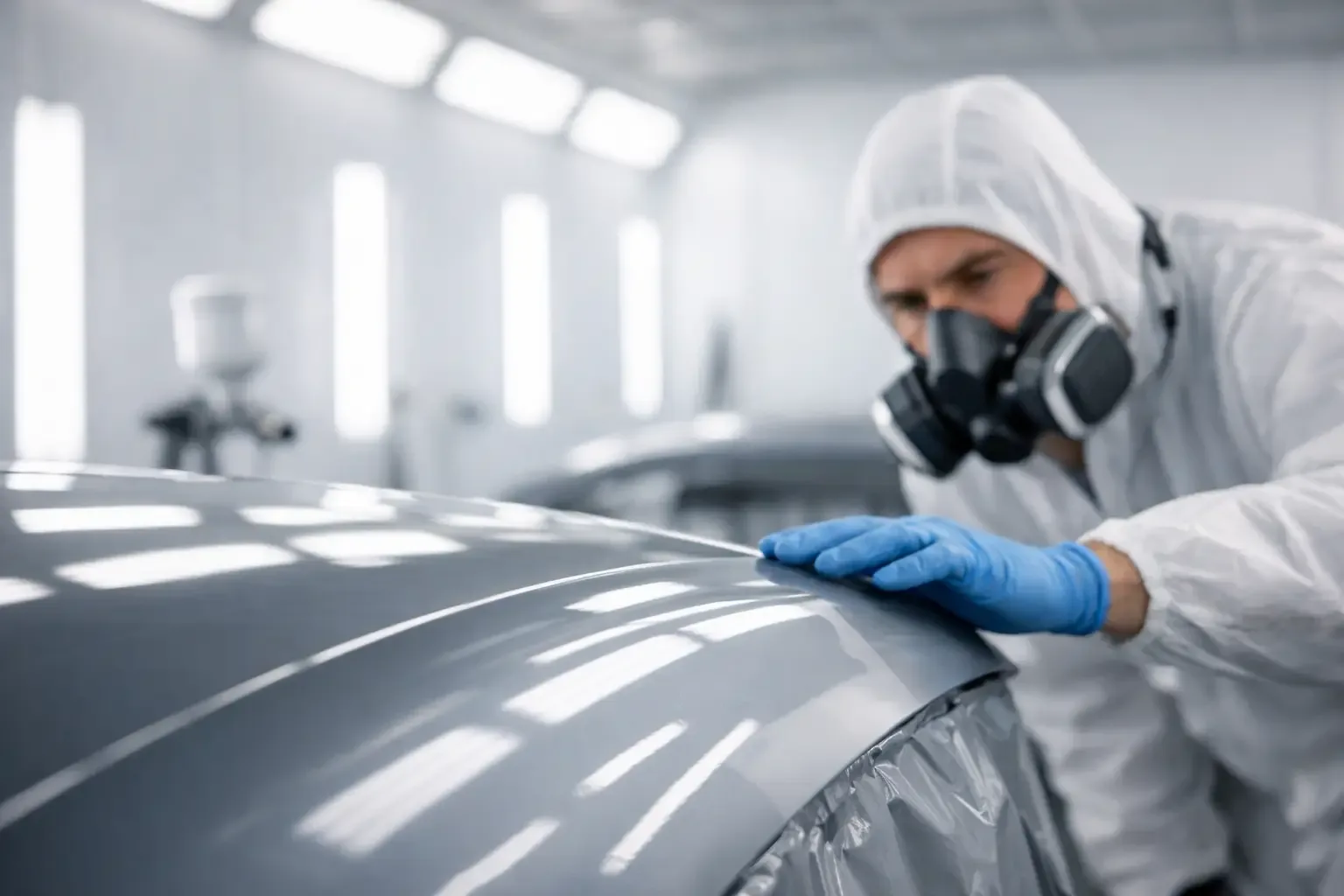
A paint defect can begin long before the coating gun is adjusted. When painters cannot clearly see metallic orientation, edge coverage, fisheyes, dry spray, or subtle color variation, rework becomes more likely. Effective paint booth lighting gives operators a consistent view of the work surface while supporting the safety requirements of a spray environment. The right fixture layout is not simply a brightness decision. It is a coordinated decision involving hazardous-location classification, color rendering, glare control, booth geometry, cleaning practices, and service access.
For a project-specific paint booth lighting review, provide the booth dimensions, process details, hazardous-area classification, mounting locations, and target foot-candle levels to Maes Lighting. A technical review can help identify suitable industrial LED fixtures and provide the datasheets, certifications, and photometric files needed for submittals before equipment is ordered.
Why Paint Booth Lighting Requires More Than High Output
A paint booth has a very different visual task than a warehouse aisle or general fabrication bay. The painter must evaluate wet film appearance on curved, reflective surfaces. Vehicle panels, equipment housings, cabinets, and fabricated parts can all conceal defects when light arrives from only one direction or creates concentrated reflections.
High lumen output alone can make the problem worse. A fixture that produces glare or harsh points of reflection may reduce the painter's ability to judge the finish, even when a light meter reports acceptable illumination. Useful booth lighting combines adequate illuminance with broad, controlled distribution that reveals surface texture and color without creating distracting hot spots.
The booth environment also changes the fixture requirements. Overspray, solvent vapor, dust, elevated temperatures, and frequent cleaning can shorten the life of equipment that was designed for a clean commercial interior. In a classified spray area, the fixture must be appropriate for the identified hazardous location. A general-purpose LED high bay may be efficient, but efficiency does not make it acceptable for a Class I or Class II location.
Start With the Booth Classification and Process
The first selection question is where each fixture will be installed relative to the spray operation. A fixture inside the booth, at a booth wall opening, in an exhaust plenum, or above a separated mixing room may face very different code and environmental conditions. The authority having jurisdiction, facility safety team, and electrical engineer should establish the area classification before fixture selection is finalized.
Paint processes can involve flammable vapors, combustible dust, or both. Automotive refinishing and industrial liquid coating operations commonly raise Class I concerns where flammable vapors may be present. Powder coating can introduce combustible dust considerations. The applicable classification, division or zone, group, temperature code, and installation method should match the actual process and local code requirements.
This is where the trade-off between a sealed fixture and an explosion-proof fixture matters. A vapor-tight fixture is designed to resist moisture, dust, and contamination ingress, but it is not automatically rated for a classified hazardous location. Conversely, an explosion-proof fixture may be suitable for a hazardous area yet still need the right lens material, gasketing, corrosion resistance, and optical distribution for the booth. Product terminology should never replace a review of the listing and installation documentation.
Conditions Outside the Spray Zone Still Matter
Not every fixture serving the paint department must be hazardous-location rated. Prep areas, inspection stations, staging zones, and adjacent workspaces may have different requirements. Separating those areas correctly can reduce project cost while maintaining compliance. It also allows the lighting design to prioritize the visual task in each location rather than applying one fixture type everywhere.
Build the Layout Around the Surface Being Inspected
Good booth illumination comes from direction as much as quantity. Ceiling fixtures create baseline ambient light, but side lighting often provides the contrast needed to find defects on vertical panels, recessed edges, and contoured surfaces. A layout with light from multiple angles reduces shadowing caused by the painter, spray equipment, doors, conveyors, and the part itself.
The target maintained foot-candle level depends on the work. General spray operations may require less light than final finish inspection or color-critical refinishing. Rather than selecting a nominal initial output, specify the maintained light level at the work plane after accounting for lens contamination, expected lumen depreciation, fixture spacing, and booth surface reflectance.
Photometric calculations are particularly valuable for larger booths, conveyorized lines, and installations with unusual ceiling heights. They show whether the light is reaching the sides and lower portions of the workpiece, not merely accumulating on the horizontal plane. They can also identify areas where a door frame or duct run creates a shadow before field installation turns it into an operational complaint.
Glare deserves equal attention. Clear lenses can deliver high output, but the reflection of individual LEDs on a glossy painted surface may make finish inspection harder. Diffused optics, thoughtful fixture placement, and broad beam distributions can improve visual comfort. There is no universal answer: the best optical choice depends on fixture height, wall location, part shape, and the level of finish evaluation required.
Color Quality Affects Inspection Accuracy
Color rendering index, or CRI, is a useful starting point for paint booth lighting because it indicates how naturally colors appear under a source. Higher-CRI LED lighting is generally preferred where painters must compare pigments, identify coverage variation, and inspect visual finish quality. However, CRI alone does not tell the whole story.
Color temperature affects how a coating appears and how comfortable the space feels during long shifts. Neutral to cool-white light is often selected for industrial inspection because it supports a crisp visual environment. The appropriate correlated color temperature should align with the coating evaluation process and any customer or quality-control requirement. If work is color-critical, sample testing under the proposed source is prudent.
Consistency is also essential. Mixing LED fixtures with different color temperatures, different optical systems, or aging legacy lamps can create visual zones within the booth. A painter may see a panel differently near the entrance than at the center of the booth. Standardizing fixture type and specifying allowable color consistency helps prevent that issue.
Select Fixtures for Cleaning, Overspray, and Service Access
Overspray accumulation reduces light transmission and increases maintenance demands. Fixture lenses should be suitable for the booth's cleaning method and compatible with any cleaning chemicals. In wet, dusty, or washdown-adjacent areas, ingress protection and vapor-tight construction may be necessary to protect the internal driver and optics.
Lens selection requires practical judgment. A lens that is highly impact resistant may be preferred where maintenance activity or moving equipment creates physical risk. A different material may offer better optical clarity or chemical compatibility. The fixture should also be installed where personnel can safely clean or replace it without disrupting production more than necessary.
LED systems reduce relamping compared with traditional fluorescent or HID lighting, but they are not maintenance-free. Drivers, seals, lenses, mounting hardware, and emergency circuits still need inspection. Ask for expected operating temperature limits, ambient ratings, driver accessibility, warranty terms, and documentation that confirms the fixture's listing for the intended application.
Consider Emergency Lighting Early
A booth lighting plan should account for normal and emergency operation at the design stage. If normal power is lost, workers need enough illumination to stop work, exit safely, and avoid hazards around conveyors, curing equipment, and spray systems. Emergency fixtures or battery-backed systems must be suitable for their installed environment, including any classified area requirements.
Do not assume a standard emergency unit can be placed in or near a spray area. The same location assessment that governs normal fixtures applies to emergency equipment. Egress paths, door locations, and shutdown procedures should guide the design.
Documentation Helps Avoid Delays
Paint booth upgrades often involve electrical contractors, equipment manufacturers, facility engineering teams, insurers, and inspectors. Documentation can prevent a technically sound project from stalling during submittal review. The required package may include fixture cut sheets, hazardous-location markings, photometric files, installation instructions, warranty information, and applicable certificates.
For projects with domestic-content requirements, verify eligibility by the specific model rather than assuming it applies across a product family. Maes Lighting identifies the Explosion Proof IR1, IR3, IR4, and IR7 series, along with CIT models in the vapor-tight product line, as products covered under the Buy America Act. That status should be confirmed against the project's current procurement language and the exact configuration being submitted.
The most reliable paint booth installation is designed around how the booth is actually used: what is sprayed, where vapors or dust may travel, how surfaces are inspected, and how fixtures will be maintained. When those details drive the specification, lighting becomes a practical quality-control tool rather than another source of rework.