
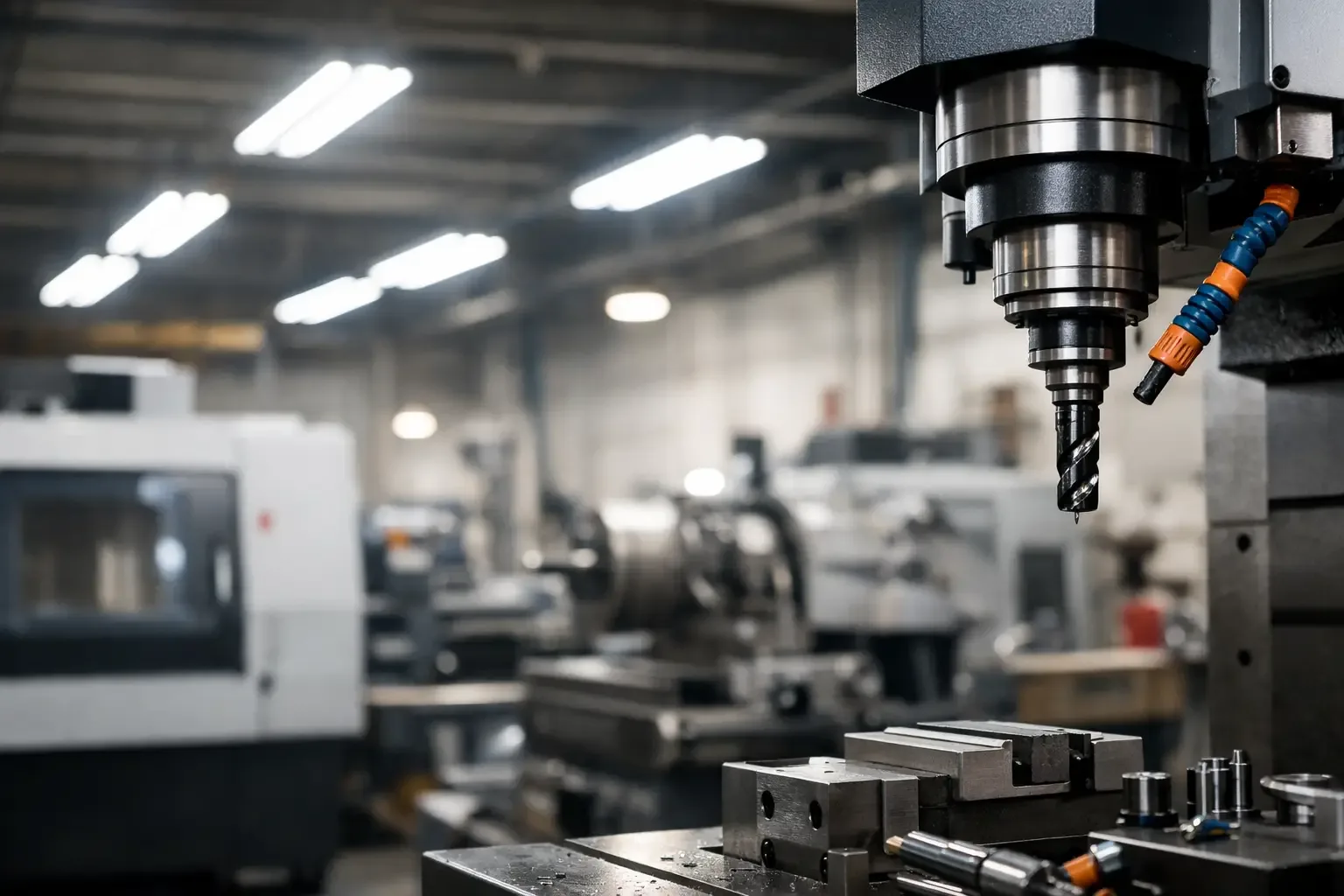
A machine shop can have enough light on paper and still create poor working conditions at the spindle, press brake, inspection bench, or tool crib. Shadows on a workpiece, glare on a CNC display, and dirty fixtures above coolant mist all reduce visibility where accuracy and safety matter. The top lighting for machine shops is not simply the fixture with the highest lumen rating. It is a coordinated lighting approach that delivers usable light at the task, withstands the environment, and supports the facility's electrical and compliance requirements.
For a fixture review based on ceiling height, machinery layout, contaminants, and required documentation, contact Maes Lighting with your application details. A proper review can identify whether industrial LED high bays, vapor-tight fixtures, targeted task lighting, or a combination of systems is appropriate before equipment is ordered and installed.
What Top Lighting for Machine Shops Must Deliver
Machine-shop lighting has to serve several jobs at once. Operators need clear visibility of cutting edges, part finishes, gauges, controls, and hazards. Maintenance personnel need dependable illumination inside service areas. Quality teams need enough vertical and horizontal light to inspect dimensions, coatings, burrs, and surface defects. A fixture plan that only lights the open floor can leave all three groups working around dark zones and reflected glare.
For most general machining areas, LED high bays provide the main layer of illumination. Their mounting height, optical distribution, output, and spacing should be selected from a photometric layout, not estimated from fixture counts alone. A shop with 24-foot ceilings, closely spaced machines, and dark equipment surfaces will need a different plan than a 40-foot fabrication bay with wide aisles and light-colored walls.
Color quality also has practical value. Higher color rendering can help personnel distinguish metal finishes, markings, fluid leaks, wire colors, and inspection details. Color temperature is less about preference than visual comfort and contrast. Many shops use a neutral-to-cool white range, but the appropriate choice depends on existing lighting, surface reflectance, camera systems, and the work performed under the fixtures.
Light levels should follow the task
General circulation and material-handling zones do not require the same illumination as precision machining or final inspection. Higher task-plane light levels are often justified at workstations where operators read dials, measure parts, change tooling, or inspect tight tolerances. Instead of over-lighting the entire facility, use high bays for ambient coverage and add focused lighting where the visual task demands it.
This layered approach can reduce installed wattage while improving usable visibility. It also allows the facility to address a single problem area, such as a shadowed lathe bank or inspection station, without redesigning the entire lighting system.
Control Glare Before It Reaches the Workpiece
Glare is one of the most common complaints after a high-bay upgrade. Bright LED sources can reflect from polished metal, coolant-covered surfaces, machine enclosures, and monitor screens. The result may be operator discomfort, reduced contrast, or an unsafe tendency to reposition equipment or block light with improvised shields.
Optics and mounting locations matter as much as lumen output. Wide distribution fixtures can be effective in open bays, while narrower distributions can direct light down longer aisles or between equipment rows. Fixture placement should account for operator sightlines and the orientation of machine doors, control panels, and inspection surfaces. In some applications, lower-output fixtures on tighter spacing provide more even lighting than fewer high-output units mounted farther apart.
A photometric plan should evaluate average foot-candles, uniformity, and likely shadow areas. Ask for the photometric files and fixture data needed for the project submittal, especially when the upgrade is tied to a new build, an engineering review, or a customer safety requirement.
Match Fixture Construction to Shop Conditions
Not every machine shop needs hazardous-location lighting, but nearly every shop has environmental conditions that affect fixture life. Coolant aerosol, cutting oils, grinding dust, welding fumes, washdown practices, vibration, and temperature swings can quickly expose the limits of a general commercial fixture.
Vapor-tight LED fixtures are often a strong choice for areas with moisture, oil mist, dust, or routine cleaning. Their enclosed construction can help protect internal components and reduce accumulation on optical surfaces. They are useful in machine-tool corridors, maintenance rooms, wash areas, and lower-ceiling work zones where a high-bay fixture is not the right form factor.
For projects that require Buy America Act documentation, identify that requirement during fixture selection rather than after approval. The Explosion Proof IR1, IR3, IR4, and IR7 series, along with CIT models in the vapor-tight fixture line, are the specific Maes Lighting products covered under the Buy America Act. Documentation requirements can vary by project and funding source, so procurement teams should confirm the applicable standard and required certificates early in the specification process.
When hazardous-location fixtures are required
Some machining operations create conditions beyond ordinary industrial exposure. Areas handling flammable solvents, coatings, fuels, combustible metal dust, or volatile chemicals may require explosion-proof lighting or fixtures approved for the applicable hazardous location classification. The classification must be determined by the authority having jurisdiction and the facility's hazard assessment, not by fixture preference.
Explosion-proof fixtures are designed for defined hazardous environments and should be selected by Class, Division or Zone, Group, temperature code, mounting method, and ambient temperature rating. Installing a standard high bay in a classified location to save initial cost can create a compliance problem and introduce unnecessary risk. Conversely, specifying hazardous-location equipment in every area can add cost and complexity without a justified operational benefit.
Plan for Maintenance, Not Just Installation
An LED upgrade is often evaluated by energy savings and expected service life. Those are relevant, but a machine shop should also consider how fixtures will be accessed, cleaned, and replaced. A fixture mounted above production equipment may require scheduled downtime, lift access, and lockout coordination. Long-life components are valuable because they reduce the frequency of those disruptions.
Choose housings, lenses, gaskets, and finishes that fit the contaminants in the space. Aluminum housings may perform well in many industrial interiors, while corrosive exposure or aggressive cleaning chemicals may call for more specialized construction. In washdown or food-adjacent manufacturing areas, ingress protection and sanitation requirements can lead to NSF- or IP69K-rated equipment rather than a typical shop fixture.
Controls should be practical as well. Occupancy sensors can reduce energy use in storage, maintenance, and intermittently used zones. Daylight harvesting can work near skylights or dock doors, but it must be commissioned carefully so operators do not experience distracting light changes during precision work. In active machining areas, manual override and stable light output may matter more than the maximum theoretical control savings.
Build the Submittal Package Early
Lighting selection often stalls because the fixture appears suitable but the project team cannot obtain the needed documentation. Engineers, contractors, and purchasing teams may need photometric files, cut sheets, certifications, mounting details, voltage information, hazardous-location markings, and country-of-origin or Buy America Act documentation. These should be reviewed before release, particularly on public, industrial, or regulated projects.
A complete package also reduces field substitutions. If the fixture has been selected for its ingress protection, temperature rating, optical distribution, and compliance markings, a last-minute replacement may not provide the same performance or approval status. This is especially relevant when equipment must withstand heat, chemicals, washdown, or classified-location conditions.
A Better Starting Point for a Shop Lighting Upgrade
Begin with a walk-through of the production floor and document ceiling heights, machine locations, existing circuits, contaminants, task areas, and any classified spaces. Then identify the visual problems people actually encounter: poor visibility at tooling stations, glare on controls, dim inspection benches, or repeated fixture failures near coolant and dust. Those observations create a more useful basis for fixture selection than a simple watt-for-watt replacement.
The right lighting plan should let operators see the work clearly, give maintenance teams fewer fixtures to service, and give project teams the documentation needed to approve the installation. When a fixture is matched to the machining environment instead of merely the ceiling height, lighting becomes part of production reliability rather than another recurring maintenance issue.