
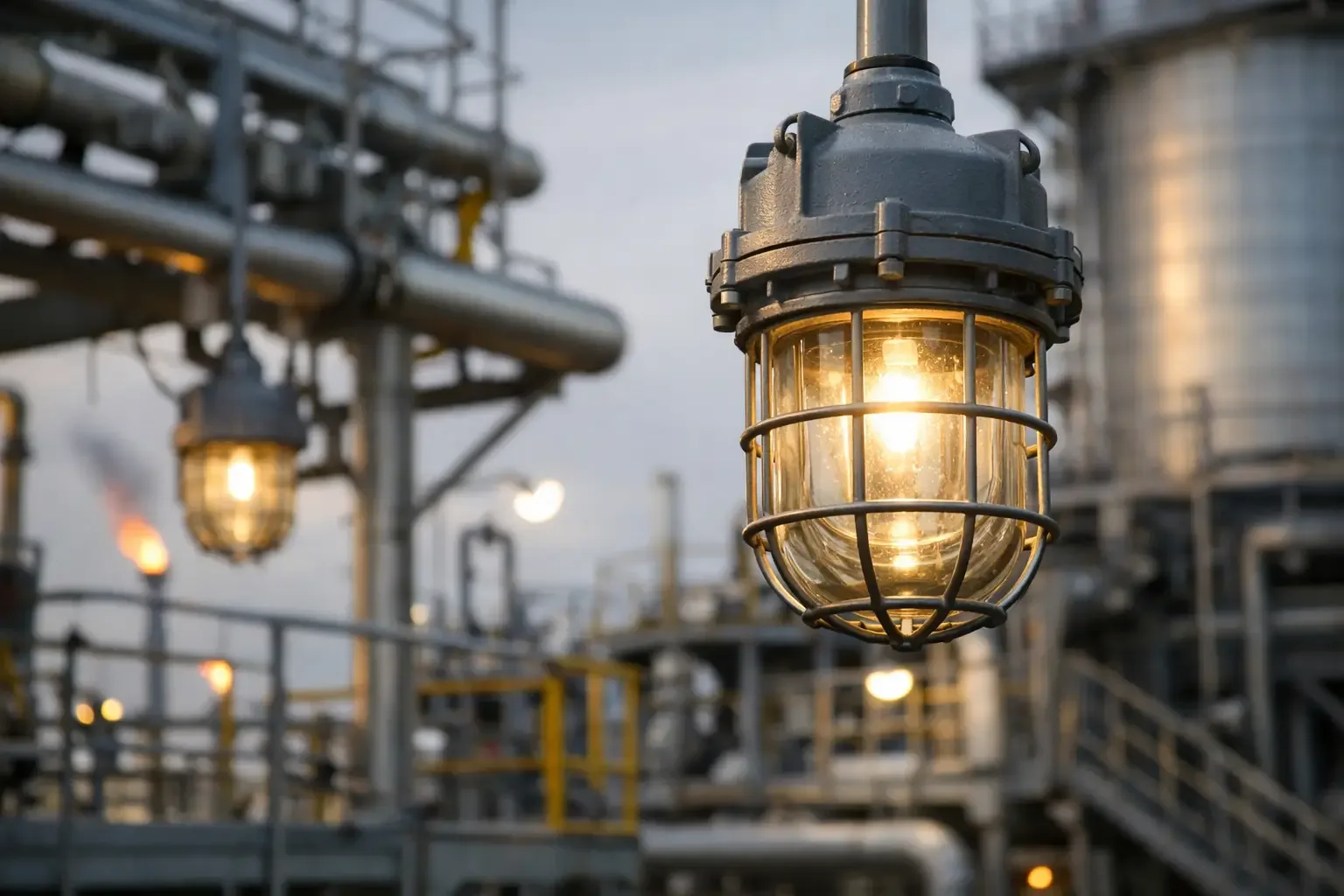
A luminaire can look industrial, carry a high IP rating, and still be unsuitable for a classified area. UL 844 light fixtures are built and evaluated for use in hazardous locations, where flammable gases, vapors, combustible dust, or ignitable fibers may be present. For facility teams and electrical contractors, the designation matters because a lighting selection has to match the area classification, the environmental exposure, and the installation requirements - not simply provide high output.
For projects involving classified areas, review Maes Lighting's explosion-proof lighting options with the site classification, mounting condition, voltage, and required documentation in hand. A project-specific review before procurement can prevent a fixture from being rejected at submittal, during inspection, or after it is installed in an unsuitable location.
What UL 844 Covers
UL 844 is the safety standard for luminaires intended for use in hazardous, or classified, locations. It addresses the construction and performance requirements that help a luminaire avoid becoming an ignition source when installed within the conditions stated on its marking. Depending on the fixture and its certification, those conditions may address Class I gas and vapor locations, Class II combustible-dust locations, Class III ignitable-fiber locations, or certain Zone-classified environments.
The practical point is straightforward: UL 844 is not a blanket approval for every hazardous area. The fixture's complete label is the controlling document. A luminaire marked for Class I, Division 2, Groups A, B, C, and D is not automatically acceptable in a Class I, Division 1 location. Likewise, a dust-rated fixture must be evaluated against the specific Class II division, group, ambient temperature, and installation conditions identified for that space.
The authority having jurisdiction, the facility's electrical-area classification drawings, and the applicable edition of the National Electrical Code determine what is required. Product literature should support that decision with the listing information, temperature code, ambient operating range, electrical ratings, and installation instructions.
Why the Marking Matters More Than the Product Name
Terms such as explosion-proof, hazardous-location rated, and intrinsically safe are often used loosely in purchasing conversations. They do not mean the same thing, and a fixture's marketing name should never substitute for its certification marking.
An explosion-proof luminaire is designed so that, if an internal ignition occurs, the enclosure can contain it and prevent ignition of the surrounding hazardous atmosphere. That construction is common in more demanding Class I, Division 1 applications. A fixture approved for Division 2 may use a different protection method because ignitable concentrations are not expected during normal operation. Both can be appropriate products, but only when matched to the classified area.
The marking also identifies the gas or dust groups for which the fixture is suitable. In Class I installations, Group B hydrogen service imposes more stringent requirements than many Group C or Group D applications. In dust environments, the material characteristics matter as well. Conductive metal dust, grain dust, coal dust, and plastic dust do not create identical hazards or selection criteria.
Temperature code is another frequent point of failure. A fixture may be properly listed for the class and division but still be unacceptable if its maximum surface temperature exceeds the ignition temperature limits for the material present. LED technology reduces wattage and maintenance compared with legacy HID lighting, but it does not eliminate temperature-code review. Drivers, optics, housings, and elevated ambient conditions all affect the certified temperature rating.
Start With Area Classification, Not Fixture Wattage
A reliable specification process begins with the location, not with lumen output. The electrical drawings or hazardous-area classification study should identify whether the location is Class I, II, or III; Division 1 or Division 2; or a Zone designation. It should also identify the applicable group and any special installation constraints.
Once the classification is established, evaluate the physical environment. Refineries, chemical processing units, paint operations, grain handling spaces, wastewater facilities, and battery rooms can all involve hazardous-location considerations, but their lighting exposures differ substantially. A fixture near a process skid may see vibration, corrosive washdown, and high ambient heat. A fixture in a covered loading area may need rain resistance, cold-weather starting capability, and a mounting arrangement that preserves access for maintenance.
Only after those requirements are clear should the team set photometric and operating targets. Required foot-candles, ceiling height, spacing, glare control, emergency-lighting strategy, and lighting controls affect the final design. Replacing a 400-watt HID fixture with an LED model based on nominal wattage alone can create dark work planes, excessive glare, or uneven aisles. Photometric files and a layout review provide a more defensible basis for selection.
Environmental Ratings Still Matter
A UL 844 listing addresses hazardous-location suitability within the marked conditions. It does not automatically confirm that a fixture will withstand every harsh exposure at the site. Many industrial applications need additional protection against water ingress, corrosion, impact, heat, or sanitation chemicals.
For example, an outdoor hazardous location may require a fixture with a suitable wet-location rating and corrosion-resistant housing. A food or beverage facility may need a separate evaluation for NSF requirements, washdown compatibility, and IP69K performance in areas exposed to high-pressure, high-temperature cleaning. A coastal terminal or vessel-related application may call for marine-grade materials and finishes that resist salt exposure. These are complementary requirements, not interchangeable labels.
Ambient temperature deserves the same attention. Standard industrial LED fixtures are commonly designed around moderate operating temperatures. Steel mills, kiln areas, foundries, and process rooms may exceed those limits, shortening driver life or invalidating the fixture's hazardous-location rating at the actual ambient temperature. Specify the expected ambient range at the mounting elevation, not the outdoor weather forecast or a general room temperature.
Documentation That Supports Approval and Installation
Hazardous-location lighting projects move faster when the documentation is assembled before the submittal deadline. At minimum, the project team should be able to verify the fixture's exact catalog number, voltage, mounting method, hazardous-location marking, temperature code, ambient rating, ingress-protection rating where applicable, and photometric performance.
Installation instructions are especially relevant. Some listed fixtures require specific conduit entries, sealing fittings, cable glands, mounting orientations, torque values, or limitations on field modifications. Changing the wiring method, opening an enclosure improperly, substituting components, or using an unapproved mounting accessory can compromise the installation and create inspection issues.
For larger upgrades, a complete package may also include datasheets, certification documents, IES photometric files, dimensional drawings, and lead-time confirmation. Procurement teams need accurate part numbers; engineers need performance and compliance data; installers need instructions that align with the field condition. Treating those needs as part of fixture selection reduces avoidable changes later in the project.
Common Specification Mistakes
The most common mistake is specifying “UL 844” without listing the required class, division or zone, group, and temperature code. That leaves critical compliance decisions to interpretation after bid, when changing the fixture can affect cost, lead time, mounting, and photometrics.
Another mistake is assuming that a vapor-tight fixture can serve as hazardous-location equipment because it is sealed against water and dust. Vapor-tight construction may be appropriate for washdown, parking, cold storage, or damp industrial spaces, but it does not establish suitability for an ignitable atmosphere. The same caution applies in reverse: a hazardous-location fixture may need additional washdown, chemical-resistance, or food-processing qualifications for the actual environment.
Finally, do not overlook serviceability. Long-life LED luminaires reduce relamping, yet hazardous-area maintenance still requires safe access, lockout procedures, and correctly rated replacement equipment. Consider driver accessibility, spare-fixture strategy, mounting height, and whether the facility can maintain the product without disrupting production.
A Better Way to Specify UL 844 Fixtures
A strong fixture schedule states the hazardous-location classification first and then adds the application-specific requirements: lumen package, distribution, voltage, mounting, controls, color temperature, ambient range, IP rating, corrosion resistance, and documentation. This approach gives bidders and suppliers a clear technical target while allowing them to identify an equivalent listed product that actually fits the site.
When the area classification is unclear, pause before selecting equipment. Confirm the drawings with the engineer of record, safety team, or authority having jurisdiction. A well-documented UL 844 luminaire is valuable, but its value comes from being the right fixture for the exact location, installed according to its listing and supported by the records the project team needs.