
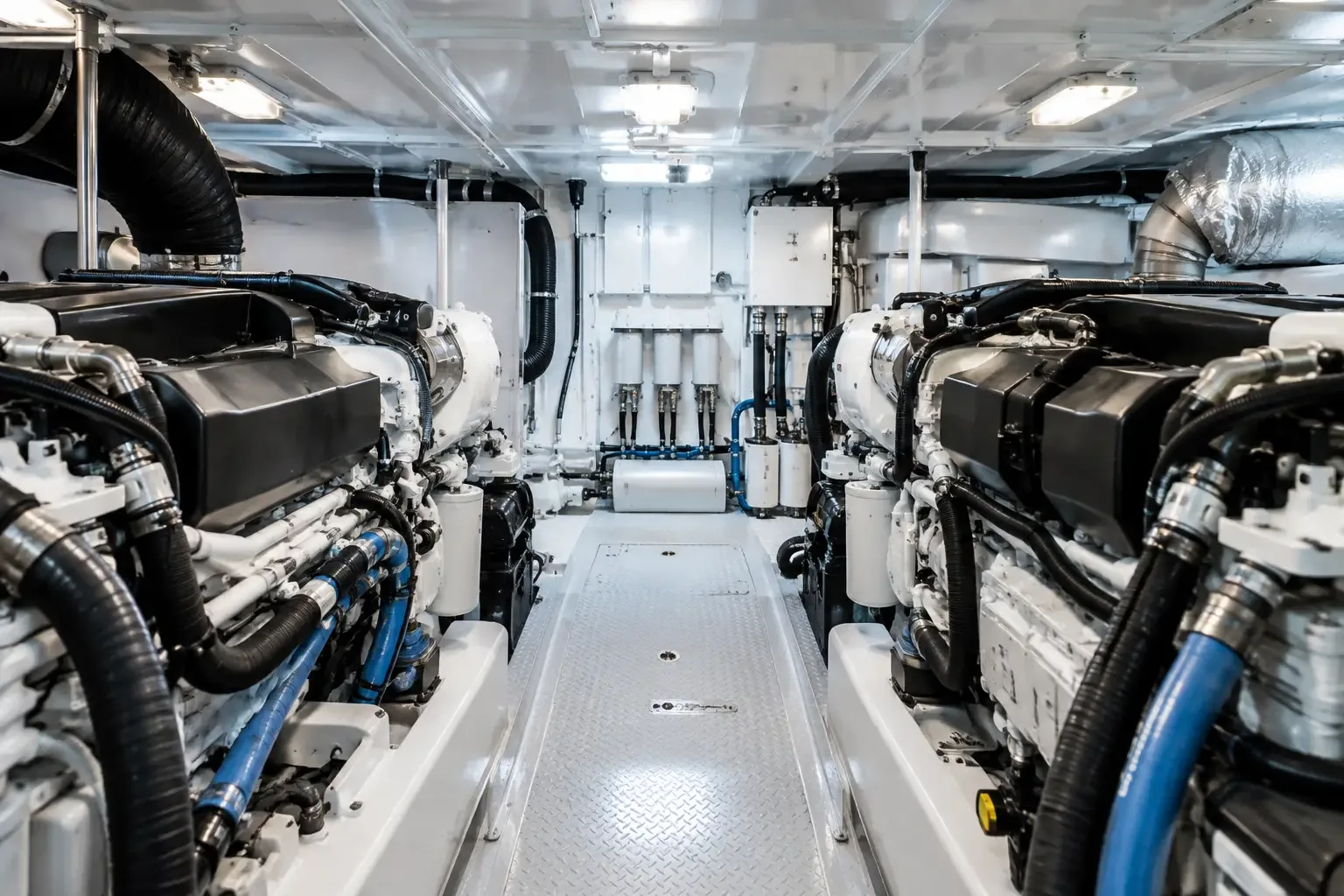
A failed fixture above a main engine is more than a maintenance nuisance. It can leave crews working around rotating equipment, hot surfaces, fuel lines, and electrical panels with poor visibility. Knowing how to light marine engine rooms starts with treating the space as a demanding operating environment, not as a generic utility area. The lighting plan must account for heat, vibration, humidity, salt exposure, oil mist, access constraints, and the vessel's classification and safety requirements.
We have found that the best engine-room lighting projects begin with a walk-through and a fixture schedule, not a simple fixture-for-fixture replacement. Document the existing mounting locations, maintenance access, ambient temperatures, operating voltages, emergency circuits, and any areas where fuel vapor could accumulate. That information determines whether a marine-rated vapor-tight fixture is appropriate or whether the application requires hazardous-location equipment.
Start With the Actual Engine-Room Hazards
Marine engine rooms combine several failure mechanisms that shorten the life of ordinary commercial fixtures. Engine vibration can loosen hardware and fatigue connections. Heat from engines, exhaust components, and nearby machinery raises ambient temperatures beyond a fixture's rating. Condensation, washdown, salt-laden air, coolant, hydraulic fluid, and fuel residue challenge gaskets, lenses, housings, and cable entries.
Classify the exposure before selecting a fixture. A dry machinery space on an inland vessel has a different lighting requirement than the engine room of an offshore support vessel, a fishing vessel with frequent washdown, or a fuel-handling compartment. Do not assume that all engine rooms are hazardous locations, and do not assume that an IP rating alone makes a fixture suitable where ignitable vapors may be present.
Where gasoline, fuel vapors, solvents, or other flammable atmospheres can be present under normal or abnormal operating conditions, the electrical-area classification must be established by the vessel designer, authority having jurisdiction, or classification society. In U.S. work, that may involve U.S. Coast Guard requirements and National Electrical Code concepts; vessel class rules may also come from organizations such as ABS. For classified hazardous areas, use luminaires specifically listed or certified for the stated class, division, zone, gas group, and temperature code. UL Solutions and Intertek documentation can help verify that a claimed hazardous-location rating applies to the exact model, voltage, and configuration being installed.
Build Lighting in Layers, Not With One Bright Fixture
A practical marine engine-room design uses general, task, and emergency lighting together. General lighting gives crew members safe orientation through aisles, around machinery, and at ladders. Task lighting supports inspection, valve operation, gauge reading, fluid sampling, and electrical troubleshooting. Emergency lighting maintains a safe path to exits and critical controls after normal power is lost.
The required light level depends on room geometry, surface reflectance, vessel operation, and task detail. Instead of selecting fixtures by total lumen output, evaluate maintained illuminance at the work plane. A gauge panel mounted beside a generator, for example, needs usable vertical light on its face, not just high output measured on the deck below.
Use photometric files to model the room around obstructions. Engines, ductwork, piping, tanks, cable trays, and exhaust runs create shadows that a basic square-grid layout will miss. Mounting fixtures directly above service-side access points and electrical panels often produces better results than increasing wattage in the center aisle. Photometric review also reveals glare risks on polished metal, instrument displays, and wet deck surfaces.
Put Light Where Crews Actually Work
Prioritize the operating side of each engine, generator control panels, switchboards, fuel-transfer equipment, bilge areas, stairs, ladders, and escape routes. Service points deserve particular attention because maintenance is frequently performed with machinery warm, noise levels elevated, and access limited.
Avoid placing every fixture directly over vibration-intensive machinery. When mounting near engines is unavoidable, use a luminaire and mounting method rated for the vibration exposure, and secure wiring with marine-appropriate supports. A fixture that is well sealed but poorly mounted can still fail prematurely from repeated mechanical stress.
Select Marine Fixtures for the Environment, Not the Catalog Photo
For many non-classified engine-room applications, marine-rated LED vapor-tight fixtures are a practical choice. Look beyond the phrase “water resistant.” The specification should address ingress protection, corrosion resistance, gasket materials, lens impact resistance, operating temperature, voltage, cable entry method, and mounting hardware.
IP ratings are useful but limited. An IP66 fixture provides strong protection against dust and powerful water jets, while IP67 addresses temporary immersion. Neither rating independently confirms suitability for salt fog, fuel exposure, vibration, a hazardous location, or a high-ambient installation. Read the full datasheet and test documentation rather than treating an IP number as a complete marine qualification.
Housing and hardware materials matter. Marine-grade aluminum with an appropriate protective finish, stainless steel hardware, and UV-stable lenses can help resist corrosion, but material selection still depends on the vessel's exposure and cleaning process. In a hot, oily machinery space, verify the compatibility of seals and cable glands with the fluids that may contact them. In aggressive salt environments, pay attention to dissimilar-metal contact at brackets and fasteners, where galvanic corrosion can begin.
Check Ambient Temperature and Thermal Derating
LED service life is closely tied to heat. A fixture may perform well in a 77°F warehouse and lose output or life expectancy in an engine room with substantially higher ambient temperature. The relevant number is the fixture's maximum rated ambient temperature, often identified as Ta, not only the internal LED junction-temperature discussion in marketing material.
Review the fixture's output and life data at the expected ambient temperature. Some products derate at elevated temperatures, meaning they produce less light or have reduced projected life. This is not automatically a reason to reject the fixture. It is a reason to calculate maintained light output correctly and specify a product built for the actual condition. Never mount a standard fixture near an exhaust component simply because the fixture body feels cool during a brief inspection.
Plan the Electrical Details That Cause Real Failures
The luminaire is only one part of the system. Improper glands, unsealed entries, incompatible connectors, undersized conductors, poor bonding, or unsupported cable can defeat an otherwise suitable installation. Follow the vessel's electrical design, applicable marine rules, and the fixture manufacturer's installation instructions for voltage, grounding, branch protection, and cable-entry sealing.
Confirm whether the shipboard system is AC, DC, or supports multiple supply conditions. Voltage variation and frequency can differ from shore-based installations, especially on vessels with generators and transfer systems. Specify drivers and emergency components that match the available power arrangement. For emergency lighting, verify transfer behavior, run time, battery location if applicable, and the maintenance procedure required to prove the system will operate when needed.
Color quality also affects safe work. A neutral-white LED source with adequate color rendering generally helps crews distinguish wire colors, fluid leaks, labels, and corrosion. Extremely cool color temperatures can create a harsh appearance on reflective machinery, while overly warm light can reduce perceived clarity in detailed work. The right choice depends on the surface finishes, crew preference, and the lighting calculation, but consistency throughout the machinery space reduces visual adjustment when crews move between zones.
Specify Documentation Before Procurement
A compliant installation is easier to execute when the submittal package is complete before equipment arrives. Request model-specific datasheets, dimensional drawings, photometric files, environmental ratings, hazardous-location certificates where required, wiring details, and installation instructions. If a project requires a third-party mark, confirm that the certificate covers the finished fixture rather than relying on a component-level claim.
This is where technical review prevents costly substitutions. A fixture may appear equivalent in lumen output yet differ in temperature rating, mounting method, lens material, listing, driver voltage, or corrosion protection. Maes Lighting can help project teams compare those details against the vessel's operating conditions and documentation requirements before a purchase order creates an installation problem.
Maintain the Lighting System as Safety Equipment
Engine-room lighting should be inspected during scheduled maintenance, particularly after washdown, heavy-weather operation, machinery work, or electrical modifications. Check lenses for clouding or cracking, seals for deterioration, mounting points for loosening, and cable entries for signs of moisture or oil ingress. Clean fixtures with methods compatible with the lens, gasket, and finish, because aggressive chemicals can damage components that initially met the required environmental rating.
Record failed fixtures and their locations. Repeated failure near one engine, door, vent, or washdown station usually points to a condition the original specification did not fully address. Correcting the heat, vibration, moisture, or corrosion exposure is more valuable than repeatedly replacing the same product.
The right marine engine-room lighting makes routine checks faster and abnormal conditions easier to see. Specify around the room's real hazards, validate the ratings with documentation, and give every crew member clear light where safe operation depends on it.