
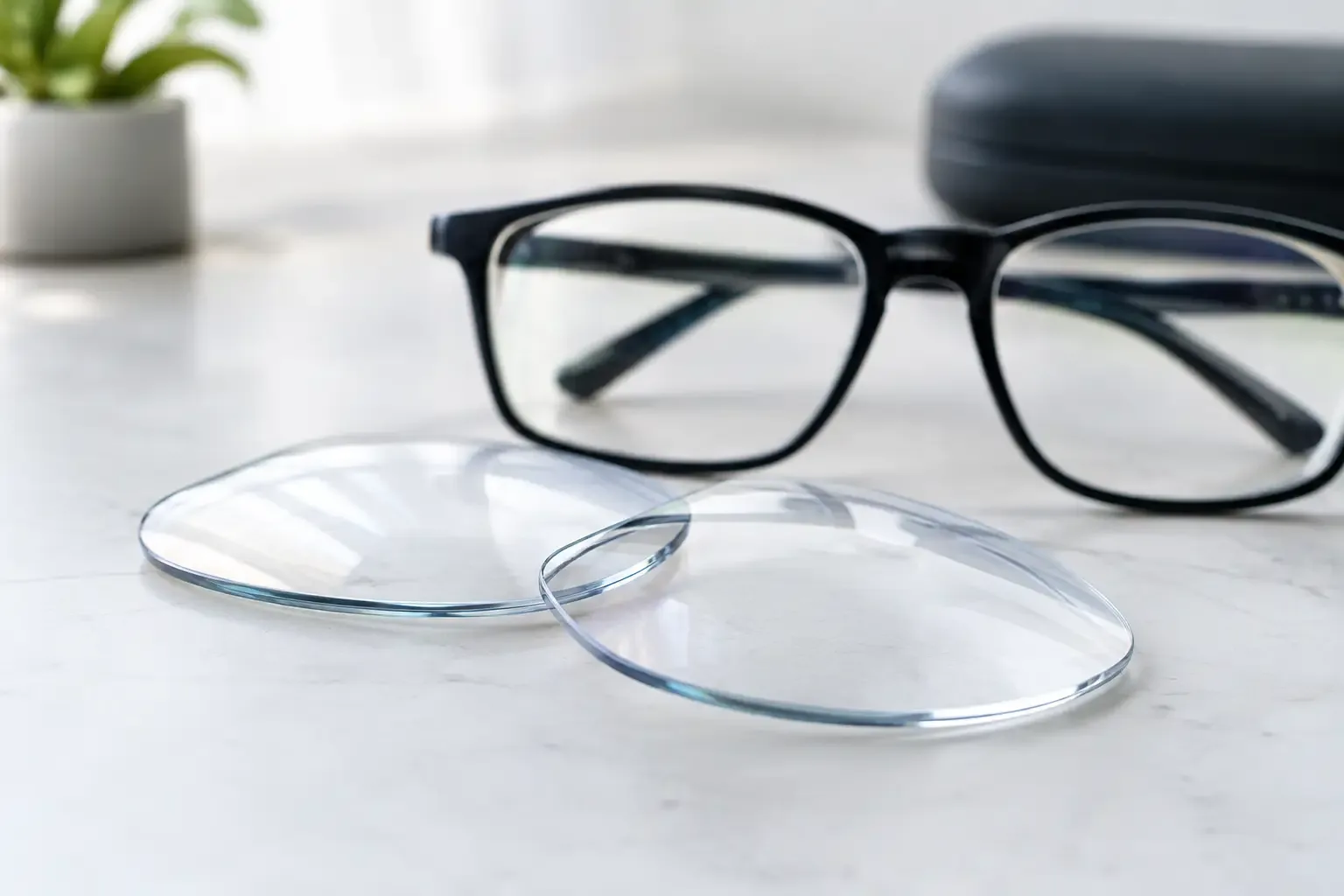
A lens failure in a refinery rack, washdown room, or loading bay is rarely just a cosmetic issue. It can expose energized components to moisture, compromise the fixture enclosure, interrupt production, and create a replacement task in a difficult access area. When evaluating tempered glass versus polycarbonate lenses, the right answer depends on the operating environment, the fixture's listing, and the consequences of impact, heat, chemicals, and cleaning procedures.
At Maes Lighting, we have found that lens material is often treated as a minor line item until a facility begins seeing cracked glass, yellowed polycarbonate, or water intrusion after aggressive sanitation. Lens selection should be reviewed alongside the complete luminaire construction: gasket material, housing alloy, cable entry, IP or NEMA rating, ambient-temperature rating, photometric distribution, and hazardous-location marking where applicable. A lens cannot make an unsuitable fixture compliant, but an unsuitable lens can shorten the service life of an otherwise well-specified fixture.
Tempered glass versus polycarbonate lenses: the core differences
Tempered glass is heat-treated to improve its strength relative to ordinary annealed glass. It provides a hard, optically stable barrier that resists scratching, retains clarity under UV exposure, and generally performs well around chemicals that can damage plastics. In industrial luminaires, it is commonly selected where long-term appearance, heat resistance, and chemical durability matter.
Polycarbonate is an engineering thermoplastic valued for exceptional impact resistance. A properly designed polycarbonate lens can tolerate strikes from moving materials, tools, carts, and incidental contact that might crack a glass lens. It is also substantially lighter than glass, which can benefit larger fixtures and installations where handling or fixture weight is a concern.
Neither material is universally superior. Tempered glass is harder but more brittle. Polycarbonate is tougher under impact but can scratch, haze, discolor, or degrade when exposed to incompatible chemicals, ultraviolet radiation, or temperatures beyond its design range. The decision should be based on the actual exposure profile, not a generic claim that one lens is “industrial grade.”
Where tempered glass is the stronger choice
High ambient temperatures and radiant heat
Tempered glass is frequently the preferred lens material for high-temperature environments because it maintains its form across temperatures that can soften, deform, or accelerate aging in polycarbonate. Steel mills, furnace approach areas, kiln support zones, foundries, and process areas with sustained elevated ambient temperatures require more than a heat-tolerant lens. The entire fixture must be rated for the measured ambient temperature at the mounting location.
LED fixtures also require thermal management. Heat affects driver life, LED output, gasket performance, and wiring insulation, not just the lens. A lens that survives the temperature while the driver operates beyond its rated ambient range does not solve the application problem. For these projects, review the fixture datasheet for maximum ambient temperature, thermal derating information, and any restrictions on orientation or mounting height.
Tempered glass is not immune to heat-related failure. Direct contact with cold washdown water or localized cooling after severe heating can create thermal shock. Where that risk exists, engineers should evaluate the fixture manufacturer's thermal-shock guidance and mounting location rather than assuming standard tempered glass will withstand every temperature transition.
Abrasion, UV, and chemical exposure
In dusty fabrication facilities, marine applications, and outdoor industrial yards, lens surface condition directly affects usable light over time. Glass has a much harder surface than polycarbonate and holds up better against abrasive dust, repeated wiping, and incidental cleaning. It also resists UV-driven yellowing, making it a practical long-life choice in exposed outdoor locations.
Glass also has broad chemical resistance, although the complete assembly still needs review. A chemically resistant lens paired with a gasket that swells or a coating that fails will still allow moisture or corrosive contaminants into the fixture. In corrosive locations, evaluate the lens, seals, fasteners, housing, and mounting hardware as one system.
Optical stability over a long service interval
For facilities that depend on consistent illumination at inspection stations, production lines, and safety-critical travel paths, glass offers stable clarity. Its resistance to scratching and haze can help preserve photometric performance through repeated cleaning cycles. This is particularly relevant when fixtures are mounted high or above production equipment, where replacement requires a lift, shutdown coordination, or confined maintenance window.
Where polycarbonate is the stronger choice
High-impact operating areas
Polycarbonate is difficult to beat where physical impact is the dominant threat. Warehouses with active forklift traffic, loading docks, maintenance shops, material-handling corridors, and areas near moving equipment can all expose fixtures to direct strikes. A polycarbonate lens may flex or show surface damage where tempered glass could fracture.
The impact advantage is not a reason to select an unprotected fixture. In repeated-impact locations, fixture placement, guard design, mounting height, and traffic patterns still matter. A wire guard may offer additional protection, but it can collect debris and complicate sanitation, so it must suit the application.
Lower fixture weight and safer handling
Polycarbonate lenses reduce fixture weight, which can be useful for large vapor-tight fixtures, long linear housings, and installations where maintenance crews repeatedly remove units for service. Lower weight does not eliminate proper mounting requirements, but it can simplify handling and reduce the likelihood of damage during installation.
In facilities where a dropped lens or shattered component presents a contamination concern, polycarbonate may also be attractive. Still, food and beverage buyers should not stop at the word “shatter-resistant.” They need a fixture that meets the facility's sanitation and material requirements, including applicable NSF criteria.
Cold environments, with verification
Polycarbonate can perform well in cold storage and freezer spaces because of its impact resistance, but the material grade and lens design must be confirmed. Low-temperature performance varies by formulation, and fixtures cycling between warm and cold zones can experience condensation and seal stress. Review the listed operating-temperature range and the enclosure rating before selecting by lens material alone.
Washdown and food-processing considerations
Food processing environments often require a more disciplined selection process because sanitation chemicals, hot water, high-pressure spray, and frequent cleaning can attack lens surfaces and seals. A lens that looks acceptable after initial installation may haze, craze, or become difficult to clean after months of chemical exposure.
For food facilities, ask for chemical compatibility information for the exact cleaning agents used onsite. Polycarbonate can be sensitive to certain solvents, alkaline cleaners, and stress-cracking conditions. Tempered glass often provides stronger chemical and surface-cleaning resistance, but fixture geometry matters just as much. Recesses, exposed threads, damaged gaskets, and poorly sealed joints can create sanitation and moisture-entry problems regardless of lens material.
For processing and washdown areas, evaluate fixtures intended for food-processing lighting with the appropriate enclosure protection, such as IP66 or IP69K when the cleaning method requires it. NSF is a useful authority for reviewing food-equipment and material standards, while the fixture documentation should identify the specific NSF designation or other applicable certification. NSF/ANSI 2 and NSF/ANSI 51 address different equipment and material considerations, so buyers should confirm what the facility, customer, and inspector actually require rather than treating “NSF rated” as a single universal category.
Hazardous locations: lens material is not the approval
In Class I, Division 1, Class I, Division 2, or combustible-dust applications, the complete luminaire's certification controls. A tempered-glass lens does not make a fixture explosion-proof, and a polycarbonate lens does not automatically disqualify one. The lens is part of the evaluated construction, which may include a specific thickness, gasket, retaining system, impact test, temperature code, and enclosure design.
Do not substitute a lens material after installation unless the fixture manufacturer specifically authorizes it. Altering a listed luminaire can invalidate the configuration evaluated by a Nationally Recognized Testing Laboratory. UL Solutions and Intertek publish certification information and marking guidance that helps buyers verify whether a fixture is listed for the intended hazardous location. The installed nameplate, certificate, and manufacturer documentation should match the area classification established by the electrical design and site safety team.
This is especially important in refineries, grain-handling facilities, paint operations, and chemical process areas. The question is not simply whether glass or polycarbonate is tougher. It is whether the exact fixture is approved for the gas, vapor, dust, fiber, temperature class, and installation conditions present.
A practical selection process
Start with the exposure that is most likely to cause failure. Choose tempered glass when sustained heat, abrasive conditions, UV exposure, chemical cleaning resistance, and stable long-term optics lead the requirement. Choose polycarbonate when direct impact, lower weight, and resistance to breakage are the primary concerns, provided the ambient temperature and chemical regimen remain within the material's limits.
Then verify the full fixture specification. Review ingress protection, gasket compatibility, impact rating where applicable, lens retention, maximum ambient temperature, hazardous-location listing, and documentation for project submittals. For facilities with unusual exposure, a small field trial can be more valuable than a generic material preference. Install sample fixtures in the actual process area, inspect them after cleaning cycles or production exposure, and document the result before standardizing across the plant.
The most reliable lens decision is the one tied to how the fixture will actually be used, cleaned, heated, and maintained. That approach reduces premature failures and gives maintenance teams a lighting system they can depend on when conditions are least forgiving.