
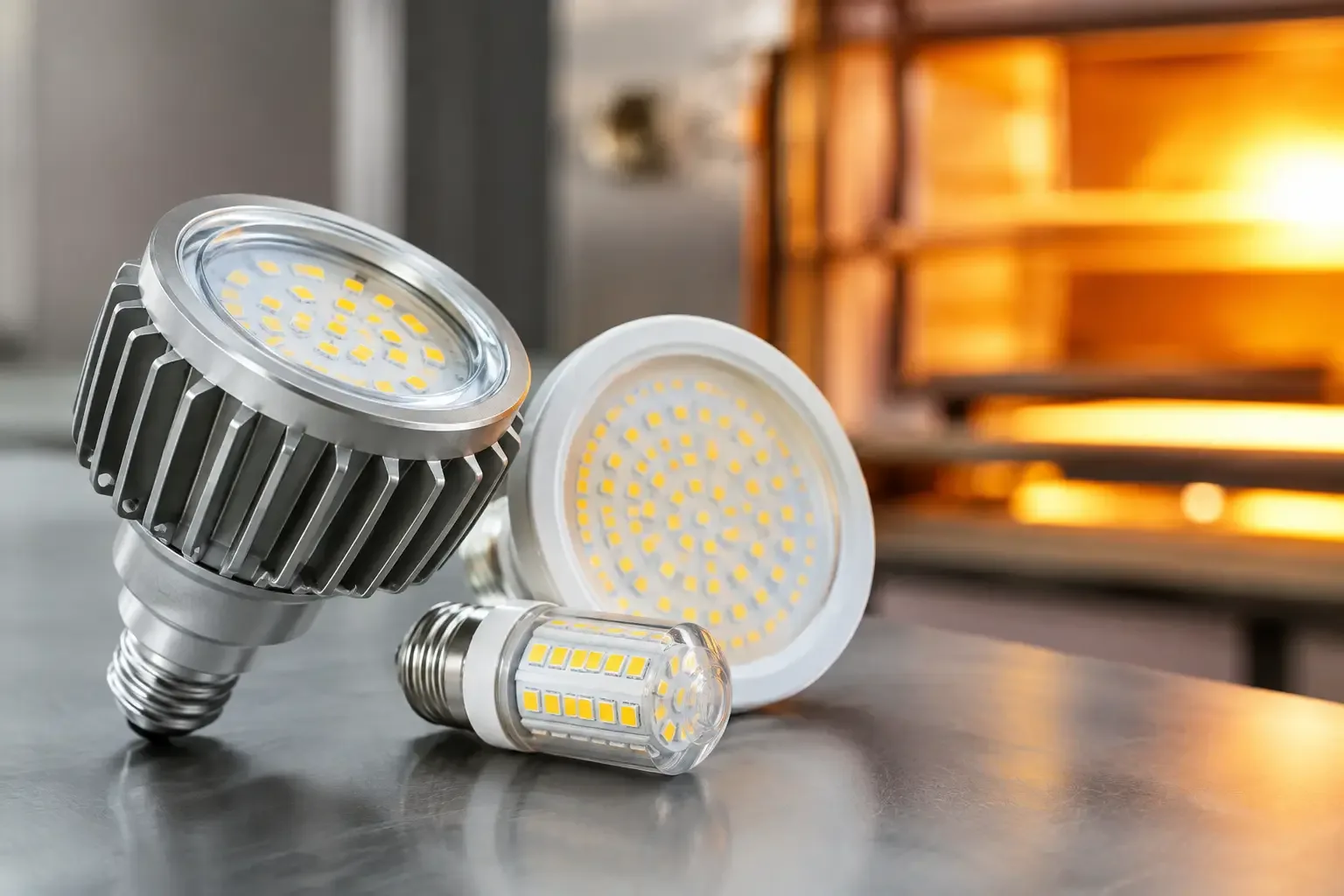
A furnace bay at 140°F ambient does not need the same LED fixture as a dry warehouse high bay operating at 95°F. Asking, “what are the best high temperature LED lighting lights?” is really a specification question: which fixture can continuously deliver usable light at the actual ambient temperature, mounting condition, contamination level, and electrical classification of the area?
The right answer is rarely the fixture with the highest lumen number or the lowest initial price. We have found that premature failures in steel mills, kiln corridors, foundries, and process plants usually trace back to a mismatch between the fixture’s rated ambient temperature and the heat it experiences after installation. Good high-temperature LED lighting begins with thermal limits, then accounts for photometrics, ingress protection, mounting location, maintenance access, and required approvals.
What Are the Best High-Temperature LED Lighting Fixtures?
The best high-temperature LED fixtures are industrial luminaires specifically rated for the site’s maximum ambient temperature, not merely heavy-duty fixtures that happen to use LEDs. In most projects, this means a purpose-built high-temperature high bay, floodlight, or linear fixture with a published Ta rating, a heat-tolerant LED driver, engineered heat dissipation, and documentation that supports the installation.
For a furnace charging floor, a steel mill crane bay, or a ceramics kiln building, the best fixture may be rated for 140°F, 149°F, 158°F, or higher continuous ambient operation. In a less severe process area, a standard industrial LED high bay may work well, but only if the measured ambient temperature remains within its published rating under normal production conditions.
The word “continuous” matters. A fixture may tolerate a short heat spike above its rating, yet repeated exposure can accelerate driver failure, discolor optical components, reduce LED output, and shorten useful life. The appropriate product is the one that can operate at the site’s sustained temperature with margin, not one that only survives a brief upset condition.
Start With Maximum Ambient Temperature
Ambient temperature is the air temperature surrounding the fixture, measured where the fixture will actually be mounted. It is not the temperature at the operator’s work level, the furnace setpoint, or a reading taken at a cool exterior wall.
Heat rises and stratifies. A plant may record 105°F on the floor while a high bay mounted near the roof structure sees 145°F or more. Radiant heat from a ladle, kiln door, hot conveyor, or furnace shell can create another layer of exposure that a single room-temperature reading will miss. Before specifying, measure or estimate the temperature at the planned mounting elevation during peak production.
A useful selection approach is to identify the highest expected ambient, then select a luminaire rated above that condition. The necessary margin depends on how stable the process is, whether the fixture sees direct radiant heat, and whether dust or residue can coat the housing. A clean, ventilated installation may need less margin than a hot bay with airborne scale, oil mist, or limited air movement.
Why LED Thermal Derating Changes the Buying Decision
LED systems create heat internally, and their electronics must also reject that heat to the surrounding air. As ambient temperature rises, the temperature difference between the fixture and its environment decreases. The fixture has less ability to shed heat, which can affect output and component life.
Thermal derating describes this relationship. Some fixtures automatically reduce light output at higher ambient temperatures to protect internal components. Others are designed with lower-wattage driver configurations, larger thermal paths, or specialized materials so they can maintain operation in hotter environments. Neither approach is automatically better. The key is understanding the published performance at your operating temperature.
Ask for photometric data and lumen information that correspond to the rated ambient condition whenever possible. A fixture’s catalog lumens may be stated at a standard test temperature, not at 140°F. For task areas around furnaces, continuous casters, or inspection points, the maintained illuminance on the work plane matters more than an initial lumen figure.
Heat also affects the driver, often the limiting component in industrial LED fixtures. A quality high-temperature product isolates or protects the driver, manages internal heat paths, and uses components suited to its listed temperature range. Do not assume a metal housing alone makes a luminaire suitable for elevated ambient service.
Match the Fixture Type to the Application
High-temperature high bays are generally the practical choice for broad overhead illumination in mills, foundries, kiln buildings, and process bays. Their beam distribution should match mounting height, aisle width, equipment shadowing, and the required foot-candle level. A narrow distribution can push light down from a tall roof, while a wider optic may better cover lower mounting heights or open work areas.
High-temperature floodlights are often better for targeted illumination of loading areas, furnace fronts, platforms, equipment access points, and exterior process zones. Their aiming must be deliberate. Poorly aimed floodlights can leave operators working in their own shadows or create glare that makes hot surfaces harder to assess.
Linear high-temperature fixtures can fit catwalks, service corridors, conveyors, and equipment lines where uniform longitudinal coverage matters. In each case, fixtures should be positioned to limit exposure to direct radiant heat and allow clearance around heat-dissipating surfaces. Mounting a properly rated fixture inside a tight, unventilated enclosure can still create a failure condition.
Do Not Confuse Heat Resistance With Hazardous-Location Approval
A high-temperature rating and a hazardous-location listing answer different questions. Heat resistance addresses whether a luminaire can operate at elevated ambient temperature. Hazardous-location certification addresses whether it is suitable where ignitable gases, vapors, dusts, or fibers may be present.
A refinery process area, solvent operation, grain-handling facility, or combustible-dust zone may require both capabilities. The fixture must match the area classification assigned by the facility and authority having jurisdiction, as well as the temperature exposure. For North American projects, buyers should confirm the applicable Class, Division, Group, and temperature code requirements under the National Electrical Code.
Verification should come from the fixture marking and its supporting documentation, not a broad product description. Organizations such as UL Solutions and Intertek provide listing and certification services used to verify that products have been evaluated to applicable standards. If the site requires a listed hazardous-location fixture, a general industrial high-temperature luminaire is not a substitute.
Look Beyond Temperature: Dust, Water, Corrosion, and Vibration
The best high-temperature LED lighting can still be the wrong choice if the facility exposes it to washdown, abrasive dust, corrosive gases, vibration, or outdoor weather. A steel facility may need impact resistance and protection from metallic dust. A pulp or chemical process area may need materials that resist corrosion. A food plant’s hot washdown zone may need a different solution entirely, with a sanitary construction and an appropriate IP rating.
Ingress protection ratings help define resistance to dust and water, but they should be read precisely. An IP66 rating does not mean the same thing as IP69K, and neither rating by itself establishes suitability for a particular chemical, pressure, temperature, or sanitation procedure. For food and beverage applications, NSF standards can be relevant to equipment selection. NSF provides standards and certification programs that help buyers evaluate materials and equipment for sanitary environments, but the applicable standard depends on the equipment and process.
Vibration deserves similar attention. Fixtures on crane structures, near stamping equipment, or on vibrating process platforms need secure mounting and construction designed for the mechanical environment. Heat cycling can loosen hardware over time, so mounting hardware, conduit entries, and aiming adjustments should be part of the maintenance plan.
Specify With Documentation, Not Assumptions
Before releasing a purchase order, request the data that allows the electrical contractor, engineer, and facility team to verify the selection. At minimum, review the maximum ambient rating, electrical characteristics, photometric files, dimensional drawings, mounting method, ingress rating, warranty terms, and relevant certification documents.
For projects with a consulting engineer or formal submittal process, documentation prevents a common delay: discovering after delivery that the selected fixture does not meet the specified temperature or location classification. Maes Lighting regularly sees the value of confirming these details before fixtures reach the site, especially where shutdown windows are short and replacement access requires lifts, scaffolding, or production coordination.
Also verify the driver configuration and supply voltage. A fixture that meets the thermal requirement but does not align with the facility’s voltage, controls strategy, or emergency-lighting plan can create unnecessary field changes. If dimming is required, confirm that the control method remains supported at the elevated ambient temperature.
A Practical Field Example
Consider a steel fabrication bay where operators reported repeated high-bay outages above a radiant-heating line. The original fixtures were suitable for ordinary industrial space, but their installation elevation placed them in a much hotter air layer than the original survey indicated. Replacing them with a higher-rated fixture was only part of the correction. The project team also shifted mounting locations away from the direct heat path, reviewed beam angles to preserve light levels, and retained access clearance for future service.
That is the pattern we recommend: solve the exposure condition, not just the failed fixture. A higher ambient rating provides protection, but thoughtful placement often delivers the longest service life.
The best high-temperature LED lighting is the fixture that remains within its published operating limits while delivering the light, approvals, and durability your process demands. Start with measured heat at the mounting point, verify the environmental and classification requirements, and select from documented industrial products rather than relying on a general-purpose high bay to perform in a severe environment.