
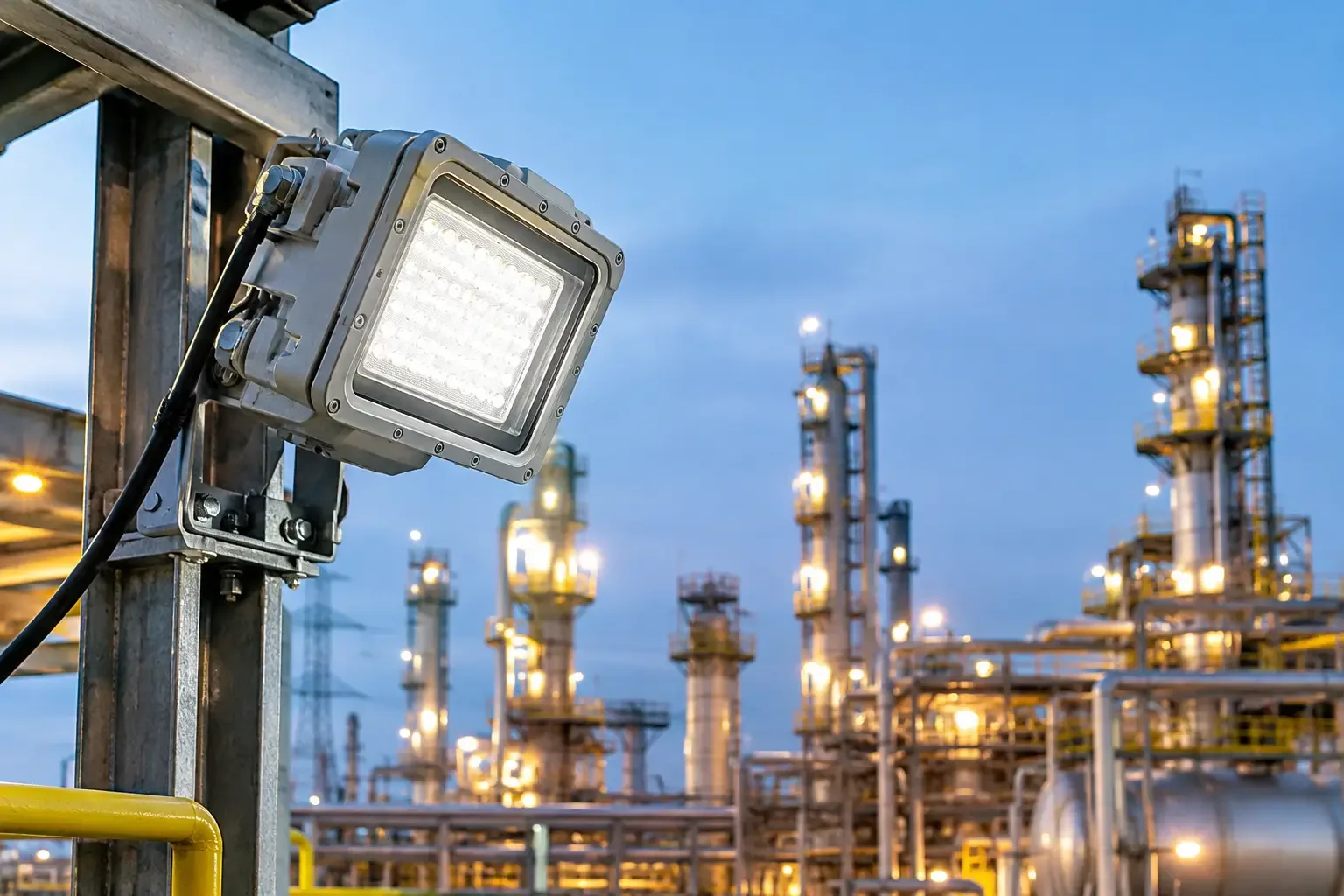
A refinery loading rack, grain transfer tower, and solvent blending room may all need hazardous-location lighting, but they should not receive the same fixture. When buyers ask, “what are the best explosion-proof LED lights for hazardous locations?” the correct answer starts with the classified area, the material creating the hazard, and the installation conditions - not a wattage or lumen package alone.
We have found that the most successful projects treat the fixture as one part of a documented safety system. The best selection matches the NEC classification, temperature code, ambient rating, mounting location, optical need, and corrosion or washdown exposure. It must also arrive with the listing and photometric documentation a contractor, engineer, inspector, and authority having jurisdiction can review.
1. Class I, Division 1 LED Fixtures for Ignitable Gas Areas
For locations where flammable gases or vapors can exist during normal operations, a Class I, Division 1 fixture is often the appropriate starting point. Typical examples include enclosed process areas near hydrocarbon handling equipment, vapor recovery systems, certain paint or solvent operations, and oil-and-gas wellsite equipment where a release can occur as part of normal work.
The word “explosion-proof” is often used broadly, but it has a specific practical purpose. A properly listed enclosure is designed to contain an internal ignition event and prevent flames or hot gases from igniting the surrounding hazardous atmosphere. That does not mean every fixture with a heavy housing is suitable for every hazardous area. The listing must specifically cover the site’s class, division or zone, gas group, and temperature code.
For these installations, choose LED fixtures with a recognized third-party certification and a clear nameplate. UL and Intertek are widely recognized testing organizations, and their certification information should align with the project specification. A fixture that looks suitable but lacks the required marking can delay commissioning or fail inspection.
2. Class I, Division 2 Fixtures for Normally Nonhazardous Areas
Class I, Division 2 generally applies where ignitable concentrations of gas or vapor are not expected in normal operation but could occur because of a spill, equipment failure, maintenance event, or abnormal process condition. Outdoor pump stations, compressor perimeters, tank farm service areas, and portions of refineries often fall into this category after a qualified classification review.
A Division 2 LED fixture can be a more efficient and cost-conscious choice than a Division 1 model when the classification permits it. It may offer a lighter profile, broader optical choices, and easier mounting while still providing the required hazardous-location protection. The trade-off is simple: it cannot be substituted into a Division 1 location merely because it is industrial-grade or weatherproof.
The best practice is to confirm the area drawing before fixture procurement. Electrical teams should verify the class and division, group designation, mounting elevation, and any boundary changes around vents, seals, pumps, or process equipment. The National Electrical Code provides the framework, but the site’s classification documents and AHJ determine the installation requirement.
3. Class II, Division 1 Fixtures for Combustible Dust
Combustible dust deserves its own selection process. Grain elevators, feed mills, flour handling operations, sugar processing areas, coal handling systems, and some metalworking environments can generate dust clouds or accumulations that create an ignition hazard. A gas-rated fixture is not automatically appropriate for a dust-classified location.
For Class II, Division 1 areas, lighting must be evaluated for the applicable dust group and for surfaces that can accumulate dust. Temperature limits become especially significant because a fixture’s external surface temperature must remain below the ignition temperature of the material involved. Dust layers can also act as insulation, making thermal performance more demanding than a clean-air installation.
LED technology can reduce maintenance at difficult-to-access bucket elevators and transfer points, but only when the fixture is listed for the actual dust hazard. We recommend confirming whether the site is classified under the Division system or the Zone system, along with the dust type, expected accumulation, and cleaning practices. Those details affect both fixture selection and the documentation package required for approval.
4. Zone-Rated LED Fixtures for IEC-Based Specifications
Many North American projects use the NEC Division system, while others specify Zones, particularly when a facility follows global engineering standards or uses IECEx and ATEX documentation. For gas hazards, Zone 0, Zone 1, and Zone 2 describe the frequency and duration of an explosive atmosphere. Dust areas use Zone 20, Zone 21, and Zone 22.
Zone-rated fixtures can be the best fit when the project specification, owner standard, or equipment package calls for that system. However, Zone and Division markings should never be treated as casual equivalents. A qualified engineer, code professional, or AHJ should determine whether a given listing is acceptable for the installation and whether any dual-marked product is needed.
For multinational equipment packages, documentation quality matters as much as the fixture itself. Ask for certificates, installation instructions, product datasheets, and photometric files early in the submittal process. This prevents a common problem: a fixture is technically capable, but its paperwork does not satisfy the project’s stated certification requirement.
5. Marine-Grade Explosion-Proof Fixtures for Corrosive Exposure
Salt air, process chemicals, washdown compounds, and vibration shorten the service life of ordinary industrial fixtures. Offshore platforms, marine terminals, coastal pump stations, and chemical plants often need hazardous-location LED lighting with corrosion-resistant housings, durable lens materials, protected hardware, and sealing appropriate to the exposure.
In these applications, a hazardous-location listing is necessary but not sufficient. Consider the housing alloy and coating system, gasket compatibility, cable entry design, lens impact resistance, and ingress-protection rating. A fixture that is compliant on day one can still become a maintenance burden if its finish degrades, fasteners seize, or moisture reaches vulnerable connections.
The best optical distribution also depends on the task. Type V distributions can provide broad area coverage at open process pads, while narrower distributions may improve visibility along pipe racks, walkways, or loading lanes. Do not assume more lumens mean better results. Glare can reduce visibility for operators working around reflective piping, vessels, and wet surfaces.
6. High-Ambient Fixtures for Hot Process Areas
Hazardous-location ratings and high-temperature capability are separate requirements. A fixture installed near furnaces, kilns, steel operations, high-heat process vessels, or roof-level heat pockets must be rated for the actual ambient temperature at its mounting point. Standard LED electronics may experience accelerated driver failure, lumen depreciation, or thermal shutdown when exposed to sustained heat beyond their rating.
Review the maximum ambient rating, often shown as Ta, along with the fixture’s temperature code. The T-code identifies the maximum surface temperature under defined conditions, while Ta identifies the ambient air temperature range in which the fixture can operate as listed. Both values matter. A fixture can meet the correct hazardous classification yet be unsuitable for a 140-degree Fahrenheit ambient condition.
Field conditions should guide the decision. Measure or model temperatures near the proposed mounting height, account for radiant heat and restricted airflow, and consider whether heat rises into roof structures or enclosed platforms. In steel mills and high-heat manufacturing, the fixture mounted several feet above the work zone may experience much harsher conditions than the ambient temperature recorded at floor level.
7. Hazardous-Location Floodlights for Perimeters and Loading Areas
Explosion-proof LED floodlights are often the strongest option for tank farms, truck loading areas, outdoor process equipment, rail loading zones, and security perimeters within classified boundaries. Their value is not simply high output. A well-selected floodlight delivers usable illumination on the actual task plane while controlling glare, minimizing dark zones, and tolerating weather exposure.
Specify mounting height, target area, aiming angle, and required foot-candle levels before choosing output. Photometric files allow designers to model coverage and verify that operators can read gauges, identify hoses, navigate stairs, and perform emergency response tasks. Poorly aimed high-output fixtures can create shadowing behind equipment or glare that compromises camera performance.
For outdoor locations, evaluate surge protection, operating temperature range, wet-location suitability, vibration resistance, and the expected effect of wind-driven rain, snow, dust, or salt exposure. Maintenance access also matters. A fixture that lasts longer has limited value if a failed driver requires extensive shutdowns or difficult lift access.
What to Verify Before Ordering Explosion-Proof LED Lighting
Before releasing a purchase order, verify these project-specific items:
- The exact NEC class and division, or applicable Zone designation, plus gas or dust group.
- The required temperature code and the measured or expected maximum ambient temperature.
- The fixture’s third-party listing, installation instructions, certificate package, and required project submittals.
- Mounting method, voltage, emergency-power requirements, optical distribution, and photometric performance.
- Exposure to chemicals, washdown, corrosion, vibration, dust accumulation, and outdoor weather.
The best explosion-proof LED light is the one that supports safe operations without creating a compliance question at startup. A careful review of the classified-area drawing and operating environment before selection gives maintenance teams fewer failures to chase, contractors cleaner submittals, and facility leaders greater confidence when the lights need to perform.