
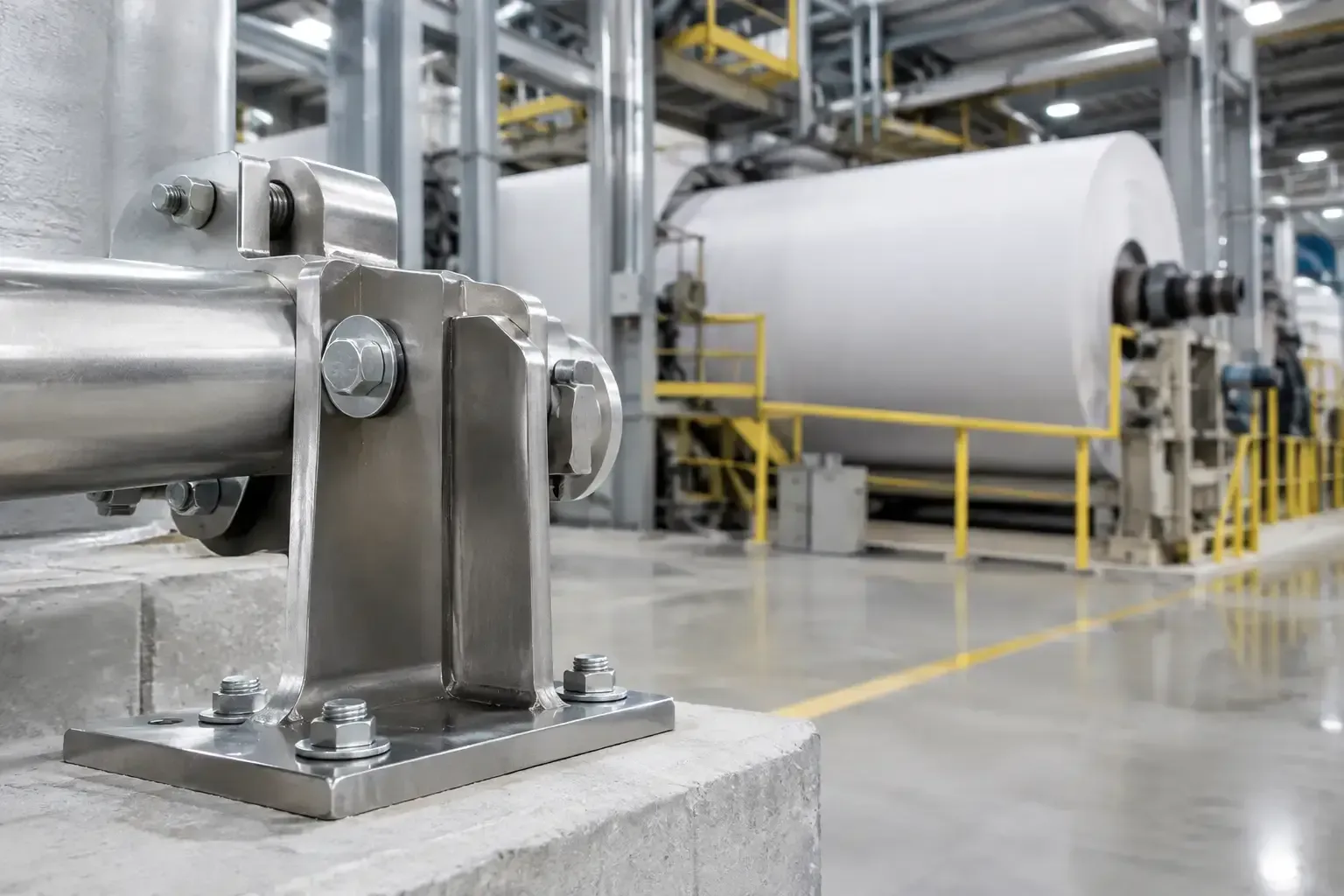
A failed fixture above a digester floor or near a brown-stock washer is not a minor maintenance event. It can leave operators working in poor visibility, force access equipment into a process area, and expose electrical equipment to steam, chemical vapor, vibration, and washdown long before its expected service life. Selecting pulp mill fixtures means matching industrial lighting to the actual exposure at each location, not applying one fixture type across an entire mill.
We have found that the most successful pulp and paper lighting projects begin with an area-by-area survey. The recovery boiler, chip handling system, bleach plant, paper machine hall, warehouses, and wastewater treatment area can have very different hazards and environmental conditions. A fixture that performs well in a dry warehouse may fail quickly in a humid process room or may not be approved for a classified dust area.
1. Start With the Process Area, Not the Fixture Catalog
“Pulp mill” describes a demanding collection of environments, not one lighting application. The correct fixture depends on what is present in the air, the expected ambient temperature, cleaning practices, mounting height, access limitations, and the consequences of a lighting outage.
For example, chip conveying and biomass fuel handling can create combustible dust concerns. Turpentine recovery, chemical preparation, and certain solvent-related operations can introduce flammable vapor considerations. Around digesters, evaporators, boilers, and lime kilns, high ambient heat and intense radiant heat may be the governing conditions. Wet-end and washing areas may instead require fixtures that resist water intrusion, condensation, and corrosive chemical exposure.
A useful survey records the normal operating condition and the abnormal one. A ceiling location that appears dry during an inspection may be exposed to steam releases, pressure-washer overspray, or corrosive condensation during shutdown and cleaning. This is where maintenance teams often provide the practical information that drawings do not show.
2. Confirm Whether Hazardous-Location Ratings Apply
Some pulp mill fixtures serve ordinary industrial spaces. Others must be listed and marked for a hazardous location under the National Electrical Code, commonly called NEC. The area classification should come from the facility’s electrical area-classification drawings and be validated by the engineer of record and authority having jurisdiction, not assumed from the appearance of the process.
For dust hazards, Class II locations are frequently relevant in wood dust, biomass, or fuel-handling operations. A Division 1 designation generally means combustible dust may be present in the air under normal operating conditions. Division 2 indicates dust is not normally suspended in the air in ignitable concentrations but could be present under abnormal conditions. The difference affects acceptable fixture construction, wiring methods, temperature limits, and project documentation.
Where flammable gas or vapor is a concern, Class I Division 1 and Division 2 classifications may apply. Division 1 covers areas where ignitable concentrations can exist in normal operations. Division 2 covers areas where they are normally contained but could escape through an accidental release or equipment failure.
Do not use the term “explosion-proof” as a general substitute for durable industrial lighting. An explosion-proof fixture must carry the correct certification and marking for the identified class, division or zone, gas group where applicable, and temperature code. UL Solutions and Intertek product markings and certification records are useful verification resources, but they do not replace the site classification or the requirements of the AHJ.
3. Treat Heat as a Fixture-Life Calculation
High-temperature pulp mill fixtures are often needed near recovery boilers, lime kilns, furnaces, hot piping, and elevated platforms above process equipment. The issue is not just whether the fixture turns on when installed. It is whether the driver, LED array, seals, lens, and internal wiring can operate within their rated temperature limits for years.
Every fixture has a maximum ambient temperature rating. That number must be compared with the actual temperature at the mounting point, including heat that rises from equipment and accumulates near ceilings, steel structures, and roof decks. A fixture mounted ten feet above a hot process may experience a substantially higher ambient than the operator standing below it.
Radiant heat also matters. A location beside a kiln opening or exposed hot duct may impose heat loading that a simple room-temperature reading misses. Shielding, standoff mounting, a different aiming position, or a purpose-built high-temperature luminaire may be necessary. Higher-rated fixtures can cost more upfront, but replacing standard industrial luminaires repeatedly in a difficult-access location is usually the more expensive option.
4. Specify Moisture, Washdown, and Chemical Resistance Separately
Steam, condensation, process water, and washdown are common causes of premature fixture failure in pulp production. An IP rating helps define enclosure protection, but it should be interpreted correctly. IP66 addresses protection from powerful water jets, while IP69K addresses high-pressure, high-temperature washdown from close range. Neither rating alone confirms resistance to every chemical used at the facility.
Vapor-tight construction is often appropriate for humid rooms, tunnels, covered conveyors, and utility areas where condensation is recurring. In more severe applications, evaluate gasket material, lens material, housing finish, cable entry seals, and stainless steel hardware. Caustic chemicals, bleach-related compounds, sulfur-bearing environments, and airborne fibers can attack materials differently.
For facilities that use aggressive sanitation procedures in associated packaging or food-grade operations, NSF requirements may also be relevant. NSF maintains standards and certification information for equipment used in food environments. Still, an NSF designation is not a replacement for electrical listing, ingress protection, or hazardous-location approval. Each addresses a different part of the risk.
5. Design for Visibility and Task Safety, Not Just Average Footcandles
A lighting layout for a pulp mill must support the way work is actually done. Operators need to read gauges, identify leaks, see obstructions on stairs, inspect moving equipment, and perform lockout/tagout tasks during maintenance. Average illuminance alone can hide dark zones around pipe racks, platforms, valves, and structural steel.
Use photometric files to evaluate light levels and uniformity at working planes, stairs, catwalks, and equipment faces. High-bay fixtures may be efficient in open paper machine halls and warehouses, but a floodlight or linear fixture can provide better directional coverage on a narrow platform. Excessive glare is also a safety problem, particularly when fixtures are aimed toward elevated control positions or equipment operators.
Color quality has practical value where teams must distinguish labels, warning tags, product condition, and fluid leaks. The right color temperature depends on the process and the existing visual environment. Brighter, cooler light is not automatically better if it produces glare, reflection off wet surfaces, or poor contrast on control panels.
6. Account for Vibration, Impact, and Maintenance Access
Pulp mills place fixtures near pumps, screens, conveyors, cranes, fans, and other vibrating equipment. Over time, vibration can loosen mounting hardware, damage connections, and shorten driver life. Specify mounting accessories and hardware that suit the structure and expected vibration, and avoid treating the fixture body as the entire system.
Impact risk is another field condition worth documenting. Fixtures mounted where mobile equipment, suspended loads, or maintenance carts can contact them may need guards or a more protected location. Guards reduce impact exposure but can trap debris and complicate cleaning, so they should be selected with the operating environment in mind.
Maintenance access often determines the true lifecycle cost. A fixture installed above a paper machine or over an active process line may require planned downtime, lifts, permits, and coordination across departments. Longer-life fixtures with replaceable components, documented drivers, and a stable product platform can reduce the risk of unplanned substitutions later.
7. Require Documentation Before the Equipment Ships
Submittal-quality documentation prevents delays during construction and commissioning. For each fixture type, project teams should be able to review a datasheet, dimensional drawing, electrical characteristics, mounting information, photometric file when applicable, environmental rating, and certification markings. Hazardous-location products should clearly state their approved class, division or zone, groups, and temperature code.
This documentation is especially important when a project replaces legacy HID or fluorescent equipment. Electrical loads, branch-circuit design, emergency-lighting coverage, controls compatibility, and mounting geometry may all change. An LED upgrade can lower energy and maintenance demands, but the design still needs to preserve required visibility and code compliance.
8. Build a Fixture Schedule That Reflects Exposure Zones
A practical pulp mill fixture schedule rarely consists of one universal SKU. It groups locations by exposure and assigns the appropriate luminaire family to each. One category may cover high-temperature boiler-adjacent areas, another vapor-tight fixture may serve wet process rooms, and a certified hazardous-location fixture may be assigned to classified fuel-handling or chemical areas.
This approach simplifies procurement while avoiding over-specification. Installing hazardous-location fixtures everywhere can add unnecessary cost and weight. Under-specifying ordinary industrial fixtures in harsh zones creates recurring failures. The right balance comes from tying each selection to a documented operating condition and a clear maintenance objective.
When evaluating pulp mill fixtures, ask for the ambient rating, ingress protection, certification details, photometric support, mounting options, and lead-time information before the purchase order is released. A fixture that matches the process, the classification, and the maintenance plan gives the facility something more valuable than illumination: dependable visibility when the process is at its hardest to access.