
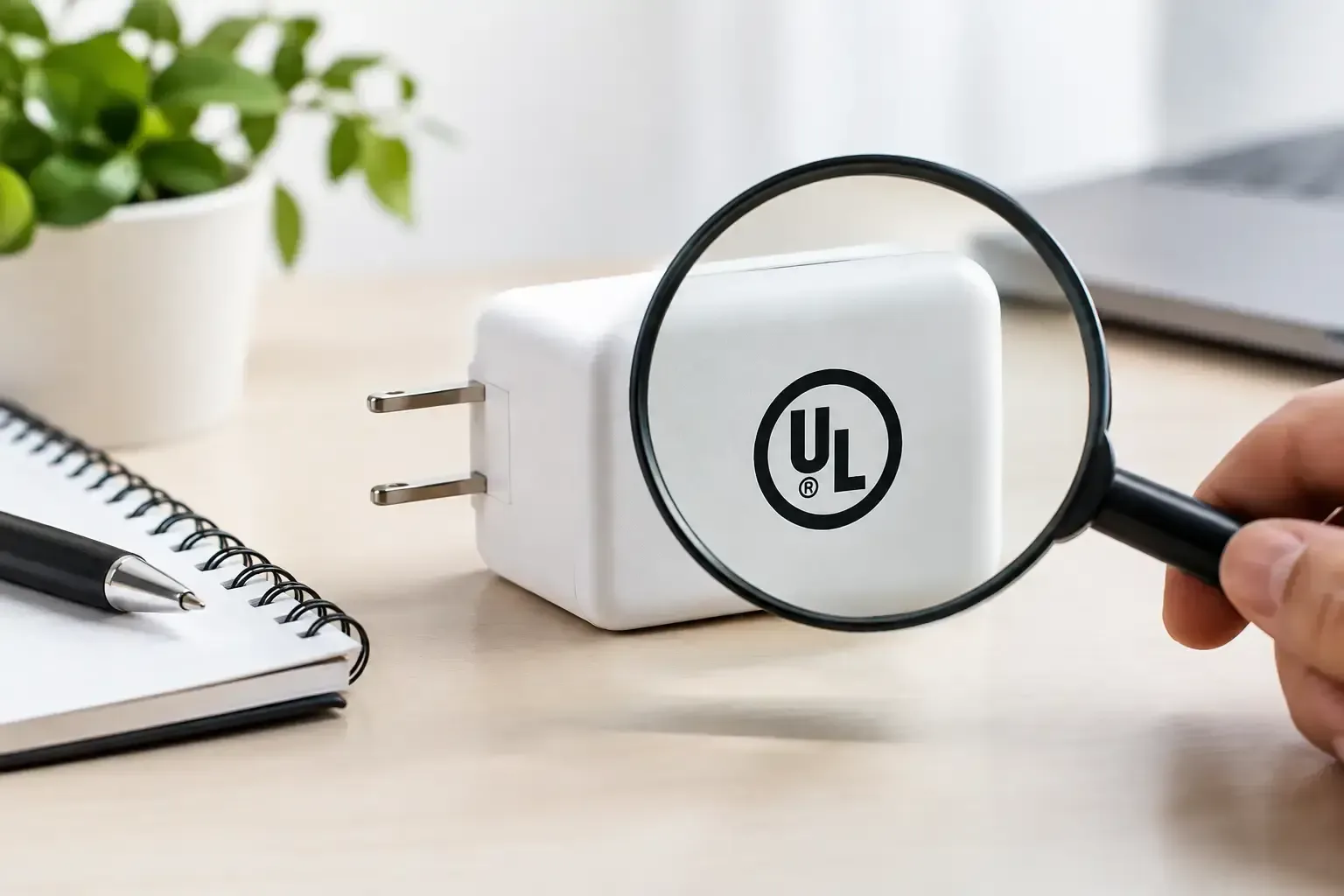
A fixture can look suitable for a refinery rack, washdown room, or grain-handling area and still fail submittal review because its label does not support the actual installation. UL certification markings are not decorative stamps on industrial lighting. They communicate what was evaluated, which standard applies, where the product may be used, and, just as critically, what the marking does not cover.
For engineers, contractors, and plant maintenance teams, reading the label correctly can prevent a late-stage fixture replacement, an authority having jurisdiction (AHJ) rejection, or an unsafe installation. We have found that the fastest way to resolve lighting questions is to start with the exact marking on the fixture, then compare it against the project specification, area classification, and site conditions.
1. Confirm Whether the Mark Says Listed, Classified, or Recognized
The first check is the type of UL mark. These terms are often treated as interchangeable in procurement conversations, but they represent different certification paths.
A UL Listed product has been evaluated as a complete end-use product for a stated application. For many industrial luminaires, this is the marking buyers expect when the fixture is being installed as delivered. The listing may address electrical safety, enclosure characteristics, wet-location suitability, and other requirements defined by the applicable standard.
A UL Classified mark means UL evaluated the product for specific properties or limited hazards. The label should identify what was classified. Classification is not automatically equivalent to a complete product listing, so the scope matters. For example, a component or assembly may carry a classification related to a defined performance characteristic without covering every condition relevant to a particular installation.
A UL Recognized Component mark applies to components intended for use within another listed or certified end product. Drivers, terminal blocks, connectors, and LED modules may be recognized components. That does not mean the assembled luminaire is listed. A fixture built from recognized components still needs evaluation as a finished product when the application requires a listed luminaire.
This distinction is especially important when evaluating modified fixtures, field-built assemblies, or equipment supplied through multiple parties. Ask for the certificate or listing information for the complete luminaire, not only for its internal parts.
2. Match the Marking to the Installation Environment
A listing only has value when it corresponds to the environment. Industrial facilities commonly combine heat, moisture, corrosive chemicals, vibration, dust, washdown exposure, and classified atmospheres. One label rarely answers every question.
For a wet process area, the luminaire may need a wet-location rating and an enclosure suitable for washdown. For food and beverage operations, a fixture may also need materials and construction appropriate to sanitation protocols. NSF standards address food equipment and material considerations, while IP ratings address ingress protection. Neither should be assumed from the other.
For a steel mill or furnace-adjacent installation, verify the maximum ambient temperature rating on the fixture documentation. A UL mark does not automatically mean the luminaire can operate beside a reheat furnace, kiln, or hot rolling line. Heat affects driver life, gasket performance, optical materials, and LED output. The published ambient rating must meet or exceed the measured and expected temperature at the mounting location.
The same discipline applies to marine and coastal environments. Salt exposure, humidity, and vibration can demand more than a general indoor or damp-location listing. Evaluate the enclosure, coating system, hardware, cable entries, and mounting arrangement as part of the complete application.
3. Read Hazardous-Location Markings Character by Character
In hazardous locations, the label is part of the engineering record. A general UL Listed mark is not sufficient evidence that a fixture is suitable for a classified location. The luminaire must carry markings that correspond to the area classification established for the site.
Under the NEC Division system, Class I addresses flammable gases or vapors, Class II addresses combustible dust, and Class III addresses ignitable fibers and flyings. Division 1 indicates that the hazardous material may be present during normal operation, while Division 2 generally addresses locations where it is present only under abnormal conditions, such as a container failure or ventilation breakdown.
The label may also identify gas groups, dust groups, temperature codes, and ambient-temperature limits. Each designation has operational consequences. A Class I, Division 2 fixture is not a substitute for a Class I, Division 1 fixture simply because both are described as explosion-proof in casual conversation.
Temperature code is a frequent point of failure. The fixture's maximum surface temperature must remain below the ignition temperature of the gas or vapor involved. A luminaire may be acceptable for one classified atmosphere but unacceptable for another based on its T-code. The electrical area classification, group, and required temperature code should come from the facility's hazardous-location documentation and the responsible engineer, not from product appearance.
4. Do Not Confuse UL Markings With ATEX, IECEx, or CE Marking
Global facilities and multinational equipment packages can bring several certification systems into one project. UL markings, ATEX, IECEx, and CE marking are not interchangeable labels.
In the United States, installations are commonly evaluated against the NEC and requirements enforced by the local AHJ. UL certifications are widely recognized, but other Nationally Recognized Testing Laboratories, including Intertek, may certify products to the same applicable standards. The relevant question is not whether one mark looks more familiar. It is whether the certification is issued by an appropriate NRTL and covers the product for the required standard and installation conditions.
ATEX and IECEx are commonly encountered in international hazardous-location work. They use Zone classifications rather than the NEC Division terminology in many cases. A Zone 1 certification cannot be presumed equivalent to a Class I, Division 1 requirement without confirming the applicable code path, certification scope, and AHJ acceptance.
When a project specification calls for a specific marking, submit the actual certificate, product data sheet, and label image early. This is far more efficient than discovering a mismatch after fixtures arrive on site.
5. Verify the Standard and Product Category Behind the Mark
The UL symbol alone does not describe the entire evaluation. The accompanying control number, category information, and product documentation help establish what standard applies. For luminaires, the applicable standard depends on construction and intended use, including portable, fixed, hazardous-location, low-voltage, or specialty equipment requirements.
Ask the supplier for documentation that identifies the exact catalog number and configuration evaluated. This matters because industrial fixtures are frequently ordered with options such as emergency battery backup, different voltage ranges, mounting accessories, cord sets, surge protection, sensors, or specialized lenses. An option can change the product configuration and may affect certification scope.
A practical example is a high-bay fixture ordered with a field-added sensor or emergency device. If the accessory is not approved for that fixture or is installed outside the evaluated configuration, the completed assembly may no longer align with the listing documentation. The same issue can arise when replacing factory-installed glands, opening sealed enclosures, or making unapproved field modifications.
6. Check the Fixture Label Against the Submittal Package
The product submittal should support the label, and the label should support the submittal. If the catalog sheet says a fixture is suitable for a hazardous, wet, high-temperature, or sanitary environment, confirm that the claimed suitability is tied to the exact model being purchased.
For professional project review, retain the fixture data sheet, certification documentation, photometric files, installation instructions, and any environmental ratings relevant to the job. A clear submittal package gives the engineer, contractor, and AHJ a consistent record to review.
Pay attention to model suffixes. One family of luminaires may include both listed and non-listed variants, multiple optic packages, or versions with different ambient-temperature limits. The base family name is not enough. The complete catalog number on the purchase order should match the complete catalog number shown in the documents and, where applicable, on the product label.
At Maes Lighting, we recommend resolving these details before release, particularly for shutdown-driven upgrades where a replacement cycle can affect production schedules. Documentation review is usually faster than correcting a compliance issue after installation.
7. Treat the Marking as One Part of a Site-Specific Decision
A compliant label does not eliminate the need for application engineering. Mounting height, vibration, maintenance access, voltage quality, emergency egress requirements, ambient heat, cleaning chemicals, and optical performance all influence whether the selected fixture will perform as intended.
Consider a food processing room with daily high-pressure sanitation. A fixture might be UL Listed for wet locations, yet still be a poor choice if its enclosure, lens retention, cable entry, or seals cannot tolerate the facility's chemical concentration and washdown pressure. Similarly, a hazardous-location fixture may meet the required class and division but provide inadequate light distribution for safe valve access or equipment maintenance.
The best selection process begins with the classification and marking requirements, then tests the fixture against the actual operating conditions. Confirm the label, confirm the certification scope, confirm the configuration, and confirm the environment. That sequence gives project teams a defensible basis for selection and helps keep lighting from becoming the reason a critical area cannot be commissioned.