
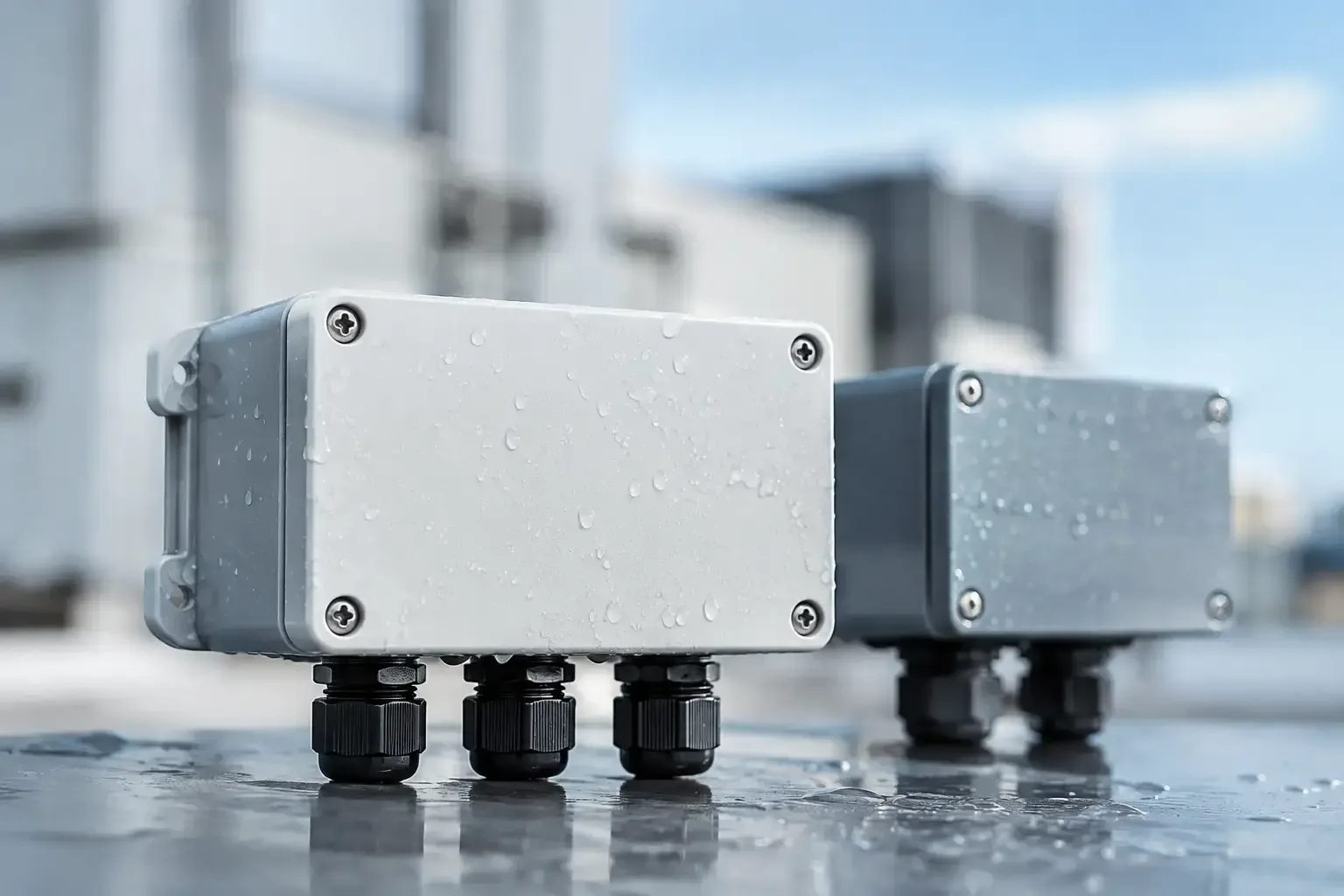
A washdown crew can turn a marginal fixture into a maintenance problem in one shift. Fine dust can do the same over months, settling around seals and cable entries until a fixture that appeared suitable begins to fail. For industrial buyers, what is ingress protection is not an academic question. It is a practical way to determine whether lighting can withstand the contaminants and cleaning methods present at the installation point.
For plant managers, engineers, and electrical contractors, IP ratings provide a fast comparison point during fixture selection. They do not replace hazardous-location listings, thermal limits, sanitation requirements, or a review of the actual process area. They do establish a common language for evaluating how well an enclosure resists solid-object and water entry.
What Is Ingress Protection in Industrial Lighting?
Ingress protection, usually stated as an IP rating, is an enclosure classification that indicates resistance to the entry of solids and water. The rating system is defined by IEC 60529. In lighting, it applies to the fixture enclosure and its ability to protect internal electrical components from conditions such as airborne dust, dripping water, spray, rain, hose-directed water, or temporary immersion.
An IP code has two numerals after the letters IP. The first numeral addresses solids. The second addresses water. For example, an IP66 vapor-tight fixture is rated as dust-tight and protected against powerful water jets. That makes it a common starting point for industrial washdown areas, exterior process equipment, and dusty production spaces, but it may not be sufficient for every cleaning regimen.
We have found that the most frequent specification mistake is treating a higher IP rating as proof that a fixture is suitable for every severe environment. It is not. The rating must match the exposure, the mounting method, the cable entry system, and all other required certifications.
1. Read the First IP Digit as a Solids-Protection Rating
The first digit ranges from 0 through 6. It describes the enclosure’s resistance to access by objects and the entry of dust. In industrial facilities, the ratings that matter most are typically IP5X and IP6X.
IP5X indicates dust-protected construction. Dust may enter in a quantity that does not interfere with satisfactory operation or safety. IP6X means dust-tight, with no dust ingress permitted under the applicable test conditions. For flour handling, grain processing, cement, metalworking, and other high-particulate operations, IP6X is generally the more defensible enclosure target.
That said, dust-tight does not mean approved for combustible dust hazardous locations. A fixture installed where combustible dust may create an ignitable atmosphere must carry the applicable hazardous-location classification for the site. An IP66 or IP67 marking alone does not establish Class II, Division 1, Class II, Division 2, or Zone suitability.
2. Use the Second Digit to Match the Water Exposure
The second digit ranges from 0 through 9, with each higher number representing a defined water-ingress test condition. The correct selection depends on how water reaches the fixture, not simply whether the building is considered wet.
IP65 is commonly appropriate where fixtures encounter low-pressure water jets or blowing rain. IP66 is intended for powerful water jets and is widely specified for demanding washdown, outdoor industrial, and marine-adjacent applications. IP67 covers temporary immersion under specified test conditions, while IP68 applies to continuous immersion conditions defined by the manufacturer.
IP69K is often requested in food and beverage processing because it addresses high-pressure, high-temperature washdown. However, buyers should verify the exact standard and test documentation behind the claim. IP69K is associated with high-pressure, high-temperature water-jet testing under standards such as ISO 20653, while IEC 60529 uses IPX9 terminology. The label matters less than confirming that the fixture has been tested to the washdown conditions used in the facility.
3. Do Not Confuse IP Ratings With Hazardous-Location Listings
An IP rating addresses enclosure ingress. It does not indicate that a fixture is explosion-proof, intrinsically safe, or approved for a classified location.
For example, a refinery pump station may require a luminaire suitable for a Class I, Division 2 location because flammable vapors could be present under abnormal conditions. The fixture may also need an IP66 enclosure because it is exposed to weather and washdown. Those are separate requirements. One speaks to ignition risk in a hazardous atmosphere; the other speaks to protection from dust and water.
UL and Intertek evaluate products against specific standards and listing requirements, and the fixture marking must align with the area classification established for the site. Electrical engineers and contractors should verify the Class, Division or Zone designation, gas group, temperature code, ambient-temperature range, and installation instructions before treating an IP-rated fixture as acceptable for hazardous service.
4. In Food Processing, IP Protection Is Only One Part of Sanitary Design
Food and beverage plants often need more than a high water-ingress rating. The fixture must also tolerate repeated cleaning chemicals, prevent harborage points, maintain sealed lenses and gaskets, and fit the sanitation program used in that room.
An IP69K-rated fixture can be a strong choice near high-pressure washdown lines, carcass-processing areas, protein rooms, dairy operations, and equipment corridors exposed to daily sanitation. Yet an IP69K label does not automatically make the fixture appropriate for direct food-zone use or confirm its material suitability. NSF standards, including NSF/ANSI 2 and NSF/ANSI 51, address different aspects of food equipment and materials. The required certification depends on the facility’s process, location, and customer or regulatory requirements.
Consider a poultry facility where fixtures above a washdown line face hot water, foam, sanitizer, and occasional impact from equipment. The specification should account for IP rating, housing material, lens construction, gasket compatibility, mounting cleanability, NSF requirements where applicable, and access for maintenance. A fixture that survives the water test but has exposed threads or incompatible seals can still create operational problems.
5. Check Cable Entries, Mounting Hardware, and Field Modifications
The IP rating on a fixture assumes it is installed according to the manufacturer’s instructions. This is where many otherwise sound specifications fail in the field.
A dust-tight fixture can lose its protection if a conduit hub is not sealed correctly, an unused opening is plugged with an unapproved component, or a field-drilled hole compromises the enclosure. The same is true when a pendant mount, junction box, cord grip, or connector has a lower rating than the luminaire itself.
For washdown installations, specify the complete assembly. That includes glands, conduits, connectors, mounting brackets, and junction enclosures. Ask whether the stated IP rating applies to the fixture in the intended orientation. A fixture tested lens-down may not provide the same protection when mounted horizontally or at an angle where water can pool around a cable entry.
6. Consider Heat, Chemicals, and Vibration Separately
Ingress protection is valuable, but it does not measure thermal endurance, corrosion resistance, impact resistance, or vibration performance. A high-temperature steel-mill application may require a fixture with a defined maximum ambient rating and documented LED thermal management, even if dust and water are not major exposures.
Similarly, a coastal loading dock may need an IP66 fixture with marine-grade materials and corrosion-resistant hardware. In a chemical processing area, the housing, lens, gaskets, and coatings must withstand the specific chemical exposure. The most suitable fixture is rarely selected by IP rating alone.
At Maes Lighting, we routinely see facilities benefit from separating these questions during submittal review: What can enter the enclosure? What temperatures will the fixture experience? What chemicals are used? Is the area classified? What cleaning method is used? That process prevents a single rating from being asked to solve every environmental risk.
7. Specify the Rating Based on the Actual Exposure
A warehouse high bay over dry storage may need only a moderate ingress rating. A loading dock, foundry aisle, or exterior material-handling area may call for IP65 or IP66 depending on rain, dust, and cleaning. A high-pressure sanitation room may justify IP69K-level washdown performance, supported by documentation for the actual test standard.
The practical approach is to document the exposure at the mounting location. Identify whether the fixture will see airborne dust, condensing moisture, direct hose spray, powerful jets, immersion, caustic chemicals, heat, vibration, or classified gases and dusts. Then evaluate the IP rating alongside the applicable UL, Intertek, NSF, NEC, and site-specific requirements.
A properly selected fixture should do more than remain illuminated after a water test. It should support safe operations, predictable maintenance intervals, clean project approvals, and long service life under the conditions your facility actually creates.